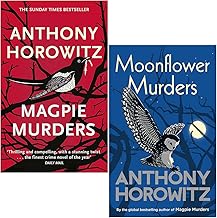
When book editor Susan Ryeland receives the unfinished manuscript of bestselling author Alan Conway's latest Atticus Pünd mystery, she discovers the final chapter is missing and Conway is dead. As Susan searches for the missing pages, she realises that Conway's 1950s whodunit contains thinly veiled caricatures of real people in his life, and that his apparent suicide may actually be murder.
Magpie Murders is a brilliantly constructed mystery-within-a-mystery that celebrates and deconstructs the classic British detective genre in equal measure. Created by Anthony Horowitz, who adapted his own bestselling novel for the screen, the series operates on two parallel narrative tracks that interweave throughout each episode, creating a uniquely complex and satisfying viewing experience.
The contemporary storyline follows Susan Ryeland, a sharp and experienced book editor who has spent years working with Alan Conway, a commercially successful but personally difficult crime novelist. Conway’s series featuring 1950s detective Atticus Pünd has made him wealthy and famous, though he privately despises the genre that brought him success, longing instead to write serious literary fiction. When Susan receives the manuscript for Conway’s latest and supposedly final Pünd novel, she’s immediately engrossed in the cleverly plotted mystery set in the fictional village of Saxby-on-Avon. However, her boss Charles Clover alerts her to two disturbing facts: the final chapter revealing the murderer is missing, and Alan Conway is dead, apparently by suicide.
The second narrative track presents the Atticus Pünd mystery itself, a loving homage to golden age detective fiction in the tradition of Agatha Christie and Dorothy L. Sayers. Set in 1955, the story begins with the death of Mary Blakiston, a housekeeper at the grand Pye Hall estate, found at the bottom of the stairs. Shortly after, Sir Magnus Pye, the wealthy owner of Pye Hall, is brutally murdered with his own sword. The elegant, terminally ill detective Atticus Pünd arrives in Saxby-on-Avon to investigate, accompanied by his loyal but rather dim assistant. The 1950s segments are filmed with meticulous period detail, capturing the aesthetic and atmosphere of classic British mystery adaptations whilst adding contemporary production values.
Susan’s investigation into Conway’s death forms the modern mystery. As she travels to Conway’s village seeking the missing chapter, she quickly realises something far more intriguing and sinister: Conway populated his Pünd novel with characters clearly based on people in his own life. His sister appears as a character, as does his ex-wife, his recently dumped boyfriend, his gardener, and various other people who had reason to resent him. Conway, it emerges, was a deeply unpleasant man who took malicious pleasure in mocking people through his fiction, barely disguising their identities whilst exposing their secrets and failings. Each person caricatured in the manuscript had motive to want Conway dead.
What makes Magpie Murders exceptional is how these two mysteries mirror, comment upon, and ultimately illuminate each other. Several actors play dual roles, appearing both in the 1950s Pünd mystery and the contemporary investigation as different characters, creating deliberate confusion and drawing connections between the two narratives. The clues to Conway’s murder may lie within the pages of his Pünd manuscript, requiring Susan to read the fictional mystery as if it were a coded message revealing the truth about a real murder. The missing final chapter becomes crucial to both mysteries simultaneously.
Susan herself is a refreshingly atypical protagonist for a mystery series. She’s a mature, career-focused woman navigating complex professional and personal relationships. She’s neither a detective by training nor an amateur sleuth by inclination; she’s simply an editor who knows story structure, character motivation, and the conventions of mystery fiction intimately. Her expertise lies in recognising narrative patterns and understanding how crime writers construct their plots, skills that prove invaluable in untangling both the fictional and real mysteries. The series allows Susan to be intelligent and capable without being superhuman, showing her as someone who occasionally makes mistakes but perseveres through determination and professional knowledge.
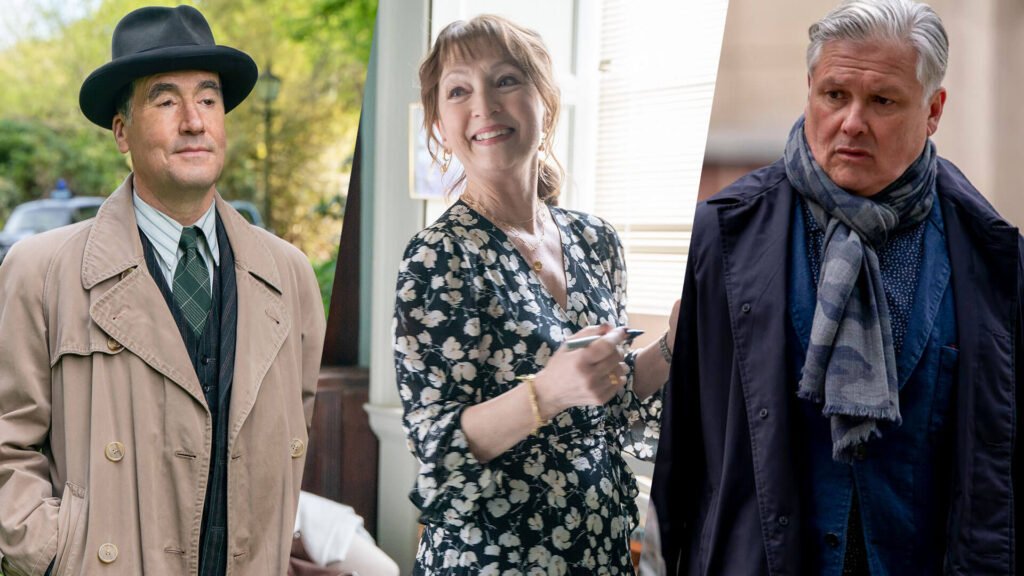
The character of Atticus Pünd himself is a fascinating creation, operating both as a genuine detective character viewers can invest in and as a commentary on the golden age detective archetype. Tim McMullan plays Pünd with quiet dignity and intelligence, creating a detective worthy of standing alongside Poirot or Marple whilst making clear he’s a construct, a fictional character created to fulfil specific genre requirements. Pünd is terminally ill, adding poignancy to his final case and serving as metaphor for the dying genre he represents.
Anthony Horowitz brings considerable expertise to the material, having written extensively for classic British crime series including Midsomer Murders, Poirot, and his own creation Foyle’s War. Magpie Murders represents both his love letter to traditional whodunits and his sophisticated critique of the genre’s limitations and conventions. The series is meta-textual without being pretentious, accessible to viewers unfamiliar with golden age mysteries whilst rewarding those who recognise the many affectionate references and in-jokes.
The production values are superb across both time periods. The 1950s sequences capture the period through costume, production design, and cinematography that evokes classic British mystery adaptations without simply imitating them. The contemporary sequences feel appropriately modern and grounded, creating clear visual distinction between the two narrative strands whilst maintaining stylistic coherence. The editing seamlessly cuts between time periods, often at moments that create deliberate parallels or ironic contrasts.
Lesley Manville brings depth and nuance to Susan Ryeland, making her fully three-dimensional rather than simply a detective substitute. Susan is shown grappling with career decisions, relationship complications with her boyfriend Andreas, office politics, and the ethical dilemmas of investigating her employer’s death whilst potentially profiting from publishing his final work. Her journey isn’t primarily about solving the murder but about understanding what she wants from her life and career, with the investigation serving as catalyst for self-examination.
The supporting cast populates both mysteries with memorable characters who feel distinctive rather than stock types. In the contemporary story, Daniel Mays plays Pünd’s real-life inspiration, a former detective who provided Conway with research assistance. Matthew Beard appears in both timelines, playing Conway’s bitter ex-boyfriend in the present and Pünd’s assistant in the past, making explicit the connections between the two narratives. Each character is given sufficient depth to be credible as both a person and a potential murderer.
The series explores themes of art versus commerce, the relationship between creator and creation, and how fiction can be weaponised. Conway’s contempt for the genre that made him successful, his desire to write “serious” literature instead of detective fiction, reflects real tensions in publishing and entertainment between commercial success and critical respectability. His use of his novels to settle scores and mock people demonstrates how creativity can be corrupted by malice. The show asks whether murder mysteries provide genuine insight into human nature or merely offer comforting fantasies where justice always prevails and order is restored.
The solution to both mysteries is genuinely surprising, playing fair with viewers whilst still managing to shock. Horowitz structures the revelations to satisfy on multiple levels, with the fictional Pünd mystery reaching its conclusion before the contemporary investigation does, allowing the resolution of one to inform understanding of the other. The missing final chapter’s contents, when revealed, prove crucial to solving both mysteries in ways that are clever without being gimmicky.
Magpie Murders also functions as meditation on the pleasures and purposes of detective fiction. Susan explicitly notes that Pünd novels, and mysteries generally, offer something increasingly rare: certainty. In a messy, ambiguous world, detective stories provide the satisfaction of seeing chaos resolve into order, guilt punished, and justice served. The series both validates this appeal and questions whether such neat resolutions are ultimately dishonest, whether real life’s ambiguities and moral complexities can be honestly represented within the detective fiction framework.
The series received universal critical acclaim, achieving perfect ratings on Rotten Tomatoes. Critics praised its intelligent construction, superb performances, witty dialogue, and the successful balancing of affectionate homage with sophisticated deconstruction. The show demonstrates that traditional detective fiction can be both intellectually rigorous and thoroughly entertaining, that respecting genre conventions needn’t mean being bound by them.
A sequel series, Moonflower Murders, based on Horowitz’s second Susan Ryeland novel, was broadcast in 2024, with Lesley Manville returning to the role. The continuation suggests Horowitz has created a sustainable format for ongoing mysteries that can explore different aspects of detective fiction whilst developing Susan’s character across multiple cases.
Ultimately, Magpie Murders succeeds as both superb mystery and sophisticated commentary on mysteries themselves. It provides all the pleasures expected from the genre whilst adding layers of complexity and self-awareness that elevate it beyond simple puzzle-solving. The series demonstrates why detective fiction endures, what makes it satisfying, and how skilled creators can innovate within traditional structures. It’s a show for anyone who loves a good mystery, particularly those who appreciate seeing the genre simultaneously celebrated and examined with intelligence, wit, and genuine affection for its traditions and possibilities.
Yes, just Register and you will then be able to add notes to every character. Just click/tap on the character. The notes can only be seen by you (when you are Logged In)