Lord Peter Wimsey
 United Kingdom
About This Show
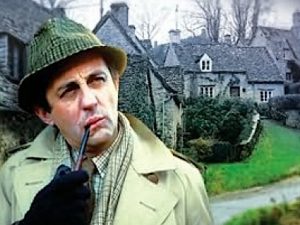
Set in 1920s and 1930s England across country estates, London gentlemen’s clubs, and rural villages, Lord Peter Wimsey follows an aristocratic amateur detective—the second son of the Duke of Denver—who, despite possessing charm, wealth, and intelligence in abundance, takes up crime-solving as a personal pursuit. Using his social connections, status, and acute observational skills whilst assisted by his loyal valet and former batman Bunter and friend Detective Inspector Charles Parker, Wimsey unravels complex murders and mysteries with wit, compassion, and an eccentric yet brilliant investigative approach that conceals deeper vulnerabilities stemming from his traumatic experiences in the Great War. Find out more about the car Lord Peter Wimsey drove.
Lord Peter Wimsey is a series of television serial adaptations of five Dorothy L. Sayers novels, starring Ian Carmichael as the aristocratic amateur sleuth, broadcast on BBC1 between 1972 and 1975 and subsequently shown in America on PBS’s Masterpiece Theatre to great acclaim. The series, beginning with Clouds of Witness in April 1972 and concluding with Five Red Herrings in August 1975, comprised 21 episodes across five multi-part serials, each running approximately 45-50 minutes. The adaptations faithfully captured Sayers’s interwar-era settings and Wimsey’s idiosyncratic, intellectual approach to detective work, creating what the Los Angeles Times described as having “no crust…more upper, no sleuth more of a hoot.”
The five adaptations were Clouds of Witness (1972, adapted by Antony Steven), The Unpleasantness at the Bellona Club (1973, adapted by John T. Bone), Murder Must Advertise (1973-74, adapted by Bill Craig), The Nine Tailors(1974, adapted by Anthony Steven), and Five Red Herrings (1975, adapted by Anthony Steven). Each story presented Wimsey tackling intricate mysteries in quintessentially British settings—from investigating his own brother’s murder charge at the family’s Yorkshire shooting lodge, to determining when an elderly gentleman died of natural causes at a London gentlemen’s club, going undercover at an advertising agency, solving a churchyard murder involving bell-ringing and canon law in the Fenlands, and investigating a painter’s death among artists’ colony in Scotland.
Ian Carmichael’s casting as Lord Peter Wimsey came about through extraordinary persistence. Carmichael, who had first proposed adapting the stories to the BBC in 1966, faced six years of delays due to the corporation’s concerns about producing another period piece following The Forsyte Saga and competition from popular American detective series like Columbo. Carmichael personally sourced copies of all Sayers’s Wimsey novels and championed the project relentlessly until the BBC finally greenlit the series in 1971. At 52 years old when filming began, Carmichael was significantly older than the literary Wimsey (typically depicted in his thirties), yet he made the role entirely his own through a compelling performance that balanced upper-class eccentricity with underlying depth.
Carmichael’s interpretation emphasized Wimsey’s charm and seemingly frivolous mannerisms—the monocle-wearing flair, witty banter, and affected upper-class speech patterns—whilst subtly conveying the character’s darker dimensions, including vulnerability stemming from World War I shell shock. In one particularly revealing scene in Clouds of Witness, Wimsey wakes from a recurring nightmare where he’s buried underground during the war, fearing no one will come to dig him out—to which Bunter quietly reminds him that he did come, during the war. This throwaway moment beautifully establishes the profound bond between the two men, forged in wartime trauma and maintained through peacetime partnership.
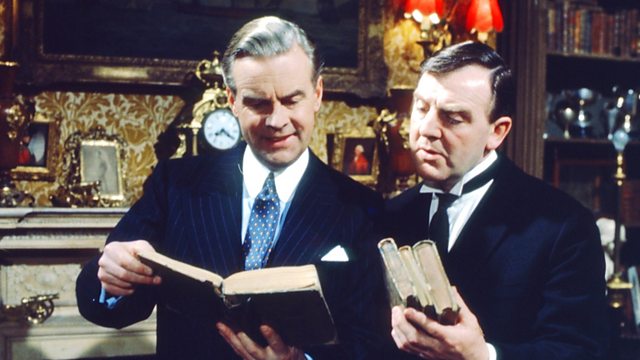
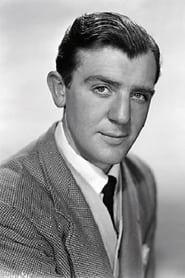
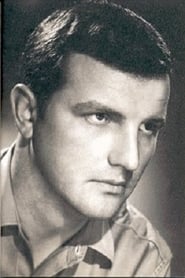
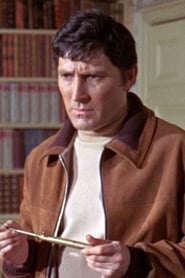
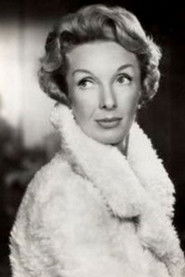
The supporting cast added considerable strength to the productions. Glyn Houston played Wimsey’s loyal valet and assistant Mervyn Bunter in three adaptations (Clouds of Witness, The Nine Tailors, Five Red Herrings), with Derek Newark taking the role for The Unpleasantness at the Bellona Club (the character doesn’t appear in Murder Must Advertise). Houston’s portrayal highlighted Bunter’s efficiency, unwavering devotion, and the fascinating class-transcending friendship between master and servant that Sayers wove throughout her novels—a relationship that serves as mild satire on the British class system whilst genuinely depicting deep mutual respect and affection. Mark Eden appeared as Detective Inspector Charles Parker in four adaptations, representing Wimsey’s connection to official police work and later becoming his brother-in-law through marriage to Lady Mary Wimsey (Rachel Herbert).
The productions employed typical 1970s BBC hybrid filming techniques—studio videotape for interior scenes and 16mm film for exterior shots—giving the series a distinctive period drama aesthetic. First-rate casts populated each adaptation with recognisable British character actors, creating believable worlds of aristocrats, servants, police officers, clergy, and various suspects that brought Sayers’s novels vividly to life. The production values, whilst constrained by BBC budgets of the era, maintained authenticity in period costumes, settings, and attention to detail that satisfied both casual viewers and devoted Sayers enthusiasts.
Australian producer Richard Beynon shepherded the first four adaptations (1972-1974), proving a key ally to Carmichael despite initial reservations about the project. Bill Sellars took over as producer for the final instalment in 1975, though Ian Carmichael later felt that a technicians’ strike during production of Five Red Herrings compromised its quality compared to earlier adaptations. The series was broadcast in a low-viewership summer slot in August 1975, and industrial action preventing further productions meant the BBC did not renew the series despite Carmichael’s hopes to continue with adaptations of the romantic novels featuring crime writer Harriet Vane.
Carmichael himself acknowledged that by 1975 he was too old to play Wimsey convincingly in the Harriet Vane stories, where the character needed to be younger and more romantically plausible. Three of those novels (Strong Poison, Have His Carcase, Gaudy Night) were subsequently adapted in 1987 as A Dorothy L. Sayers Mystery with Edward Petherbridge as Wimsey and Harriet Walter as Vane, though purists often express fondness for both interpretations. Notably, Carmichael continued playing Wimsey on BBC Radio 4 from 1973 to 1983, eventually completing adaptations of all Sayers’s Wimsey novels for radio, including a 2005 recording of Gaudy Night that finally addressed that omission.
Critical reception was generally positive, particularly on both sides of the Atlantic. The series became a smash hit with audiences, proving that intelligent period detective drama could succeed in daytime slots (BBC1) and primetime (PBS Masterpiece Theatre). The New York Times’s John J. O’Connor was somewhat critical of Murder Must Advertise, feeling the double role Carmichael played (Wimsey goes undercover as “Death Bredon”) strained credibility, though he acknowledged the novel’s intrinsic interest. However, most critics and viewers embraced Carmichael’s performance, with many considering him the definitive television Wimsey despite—or perhaps because of—his age lending gravitas and lived experience to the character’s war-scarred psyche.
The series proved so popular that fans desperately sought copies for years after initial broadcast, with the BBC remaining mysteriously silent about commercial releases. Eventually Acorn Media released the adaptations on VHS and later DVD, finally making them accessible to devoted audiences who had waited decades to revisit these acclaimed productions. The complete collection remains available and continues finding new audiences who appreciate classic British detective drama performed by exceptional casts with intelligence, wit, and genuine respect for Dorothy L. Sayers’s beloved characters.
For modern viewers, the 1972-1975 Lord Peter Wimsey series represents golden-age British television detective drama at its finest—beautifully acted, intelligently adapted, impeccably mannered, and thoroughly entertaining. It captures an England that perhaps never quite existed but which Sayers and the BBC created together: a world where aristocratic detectives solve murders between country house weekends, where loyal valets provide both practical assistance and emotional grounding, where class distinctions are acknowledged yet transcended through genuine human connection, and where wit, intelligence, and compassion triumph over violence and deception. Ian Carmichael’s Lord Peter Wimsey remains, for many, the character incarnate—proof that the perfect casting can define a role for generations.

Locations
Setting
- England, United Kingdom
Main cast
Highlighted actors have their own page listing every show they appear in.
Character Tracker
Only shows characters you’ve met so far!
🔒 More characters will unlock as you update your progress
Credits and More
Credits
Dorothy L. Sayers
Similar Shows
Shows with similar vibes and style