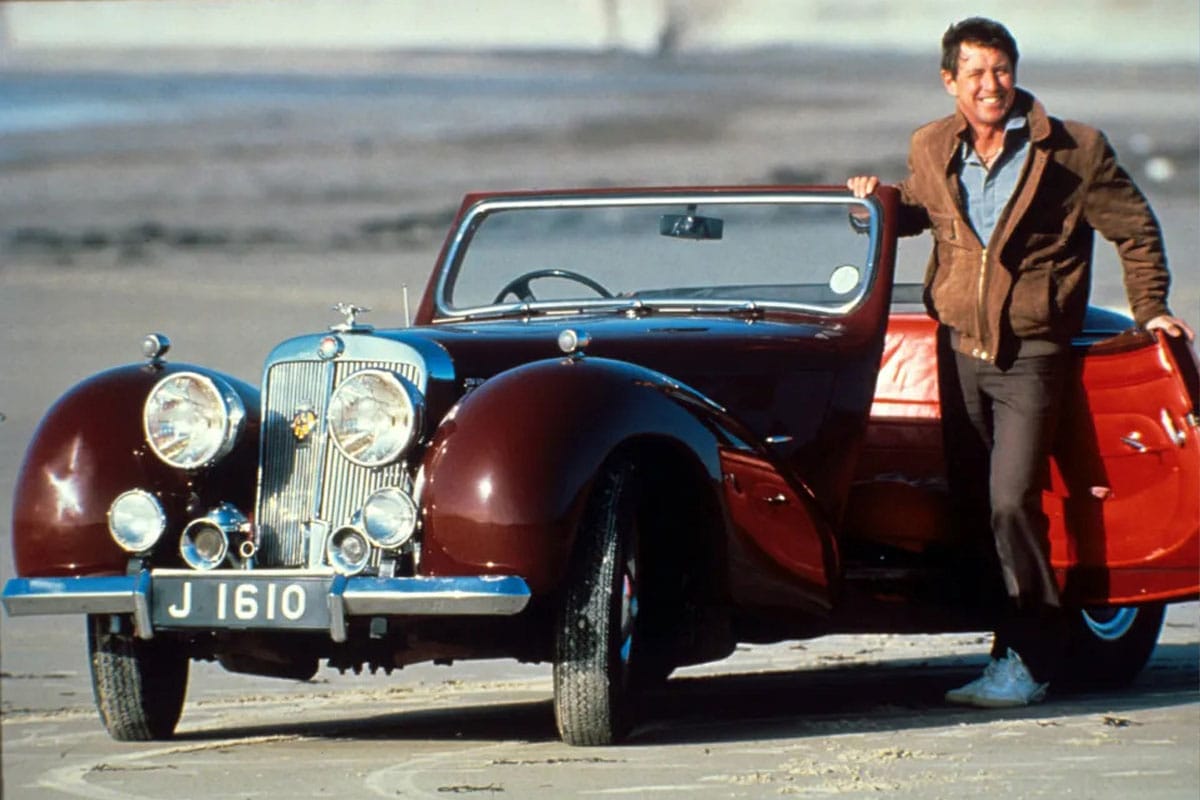
Every fan of Bergerac knows the car. That maroon Triumph Roadster — curvaceous, open-topped, and utterly distinctive against the blue waters and green lanes of Jersey — became one of British television’s most recognisable vehicles across nine series between 1981 and 1991. The registration plate J 1610 is as much a part of the show’s identity as the island itself.
But here is what most viewers never knew: J 1610 was shared by two completely different cars.
Two Triumph Roadsters. One registration. Nine series. And a story involving leases, sound dubbing, a furious buyer, and a television detective who reportedly loathed every mile he spent behind the wheel.
The Mystery of J 1610
When Bergerac premiered in 1981, the production team needed a car that looked right for Jersey — something open-topped and stylish, with the kind of pre-war elegance that suited Jim Bergerac’s maverick, romantic character. They settled on the Triumph Roadster, and sourced a 1947 Triumph 1800 Roadster from a Jersey owner who agreed to lease it to the BBC for filming.
It was fitted with the distinctive Jersey registration J 1610 — a deliberately local touch that anchored the car to the island as firmly as the scenery.
For four years it worked. Audiences fell in love with the car. It became as much a character as Charlie Hungerford or Barney Crozier. And then, in 1985, the BBC made a purely financial decision that would create one of television history’s best-kept automotive secrets.
The lease was becoming expensive. It would be cheaper to own a car outright. So the original Roadster was returned to its Jersey owner — and a replacement sourced.
The new car, a 1949 Triumph 2000 Roadster, was given the same registration plates. Same colour. Same general appearance. Viewers never noticed. The secret held for the entire remaining run of the series — and for decades afterwards.
Car One: The 1947 Triumph 1800 Roadster (1981–1985)
The original J 1610 was a 1947 Triumph 1800 Roadster (model 18TR), leased from its Jersey owner for the first four series of the show. Car enthusiasts who know what to look for can spot it in the opening titles of most post-1985 episodes, where it still appears despite the real filming car having been replaced.
How to identify the 1800 Roadster:
- No bonnet radiator mascot
- Slight colour difference between the front mudguards and the body
- Round rear wing lamps in pairs
- Wing mirrors positioned on the front wings
- No spotlamps
This car is the one that launched Bergerac and made the Triumph Roadster famous. After being returned to its Jersey owner in 1985, it remained in private hands. It survives to this day — still recognisable, still wearing the same plates it wore when John Nettles first climbed into it over forty years ago.
Triumph 1800 Roadster Specifications:
- Engine: 1,776cc Standard overhead-valve four-cylinder
- Power: 65 bhp
- Transmission: 4-speed manual
- Top Speed: 75 mph (Autocar, 1947 road test)
- 0–60 mph: 34.4 seconds — Autocar described this as “satisfying but not startlingly high”
- Production total: 2,501 cars (1946–1948)
Car Two: The 1949 Triumph 2000 Roadster (1985–1991)
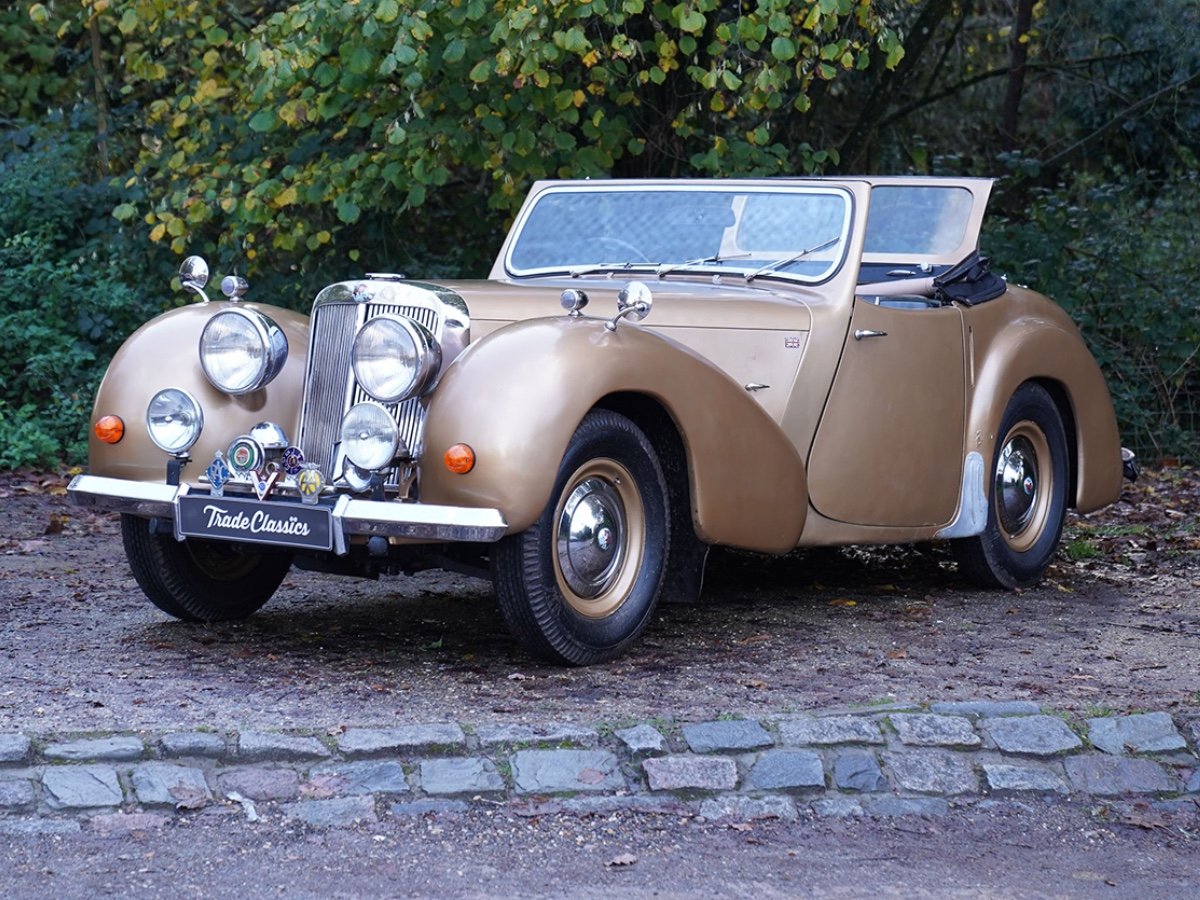
From 1985 to the final episode in 1991, the car wearing J 1610 was an entirely different vehicle — a 1949 Triumph 2000 Roadster (model 20TR), purchased outright by the BBC.
Registration (original mainland UK plate): KLX 322
Registration (filming): J 1610
Chassis Number: TRA 339
Engine Number: V365361E
Manufactured: May 1949
Colour: Maroon
The BBC changed the registration from KLX 322 to J 1610 specifically to match the previous car and maintain continuity. In the finished programmes, the swap was invisible. The two Triumph Roadsters were similar enough in appearance — same colour, same general profile — that only the most observant classic car enthusiast would spot the differences, and only then if they knew what to look for.
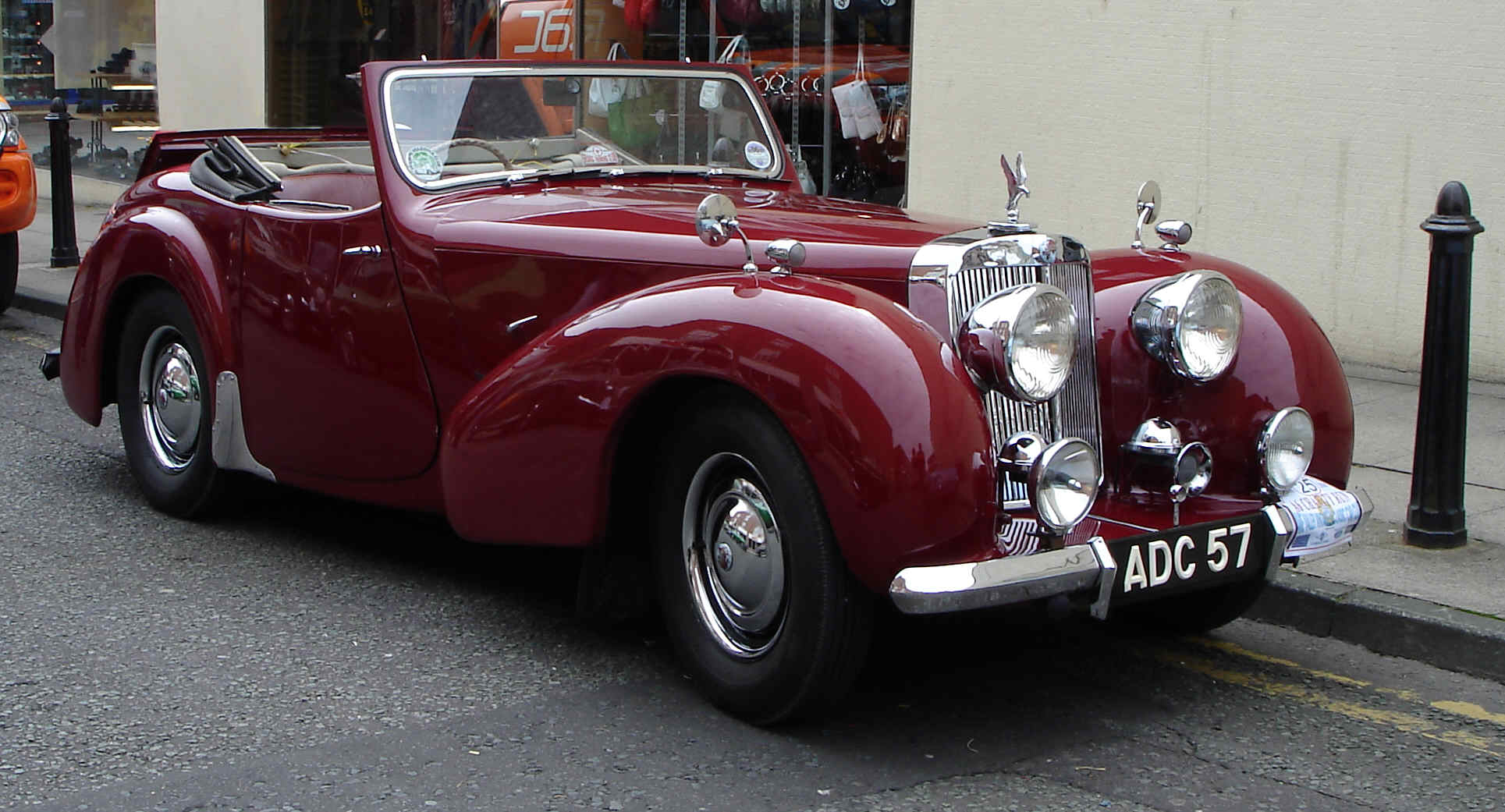
How to identify the 2000 Roadster (if you’re looking closely):
- Bonnet mascot fitted
- Matching colour between front mudguards and body (no subtle difference)
- Spotlamps fitted
- Slightly different rear lamp arrangement
Triumph 2000 Roadster Specifications:
- Engine: 2,088cc Standard Vanguard overhead-valve four-cylinder
- Power: 68 bhp
- Transmission: 3-speed with synchromesh on all forward gears including bottom
- Top Speed: 77 mph
- 0–60 mph: 27.9 seconds — a significant improvement over the 1800
- Production total: 2,000 cars (1948–1949)
The upgrade to the Vanguard engine brought meaningful performance improvement, though the switch from four speeds to three surprised many at the time. The reasoning was that the Vanguard’s torque made a close-ratio gearbox unnecessary. The synchromesh on all gears, including bottom, was a genuine advance for the era.
The Triumph Roadster: Built in the Shadow of War
Both cars shared the same extraordinary backstory. The Triumph Roadster was one of the very first post-war British car designs — created in the closing days of the Second World War by designer Frank Callaby, working under the direction of Sir John Black, managing director of the Standard Motor Company, which had purchased Triumph in 1944.
Black’s ambition was clear: he wanted a prestige sports car to take on Jaguar. The result was launched in March 1946 alongside the ‘razor edge’-styled 1800 Saloon — a car that deliberately evoked pre-war elegance in a world of post-war austerity.
Its most distinctive feature was the dickey seat hidden in the boot lid — a fold-out third seat accommodating two additional passengers facing backwards. This feature was already nostalgic in 1946, deliberately Edwardian in a world racing towards modernity. It gave the Roadster an air of theatrical period charm that no other contemporary British car possessed.
Only 4,501 Triumph Roadsters were ever built in total — both models combined. They were rare when new, and rarer still by 1981 when Bergerac began. Finding two sufficiently similar examples to carry the same registration without viewers noticing was itself a small achievement.
John Nettles and the Car He Loathed
Here is the detail that surprises people most: John Nettles, whose glamorous image behind the Roadster’s wheel appeared on posters, merchandise, and in the memories of 15 million viewers every week, reportedly loathed the car.
His complaints were specific, physical, and entirely understandable:
- The driving position caused him to scrape his knuckles repeatedly on the dashboard
- The pedal arrangement resulted in him banging his knees constantly during filming
- The brakes were unreliable — on at least one occasion refusing to stop the car when required
- The car frequently refused to start, causing significant delays on set
Most entertainingly of all: the Roadster’s engine sounded so rough and agricultural that the production team dubbed over the engine noise with recordings of a Jaguar. Throughout nine series, audiences heard a refined Jaguar purr. What was actually happening under that long bonnet was considerably less sophisticated.
A temperamental car for a temperamental detective, then — though in Bergerac’s case, only one of them was acting.
The Show: Bergerac (1981–1991)
From Shoestring to Jersey
Bergerac was created by producer Robert Banks Stewart after his previous hit series Shoestring — starring Trevor Eve as a freelance radio detective — came to a sudden end. The BBC needed a replacement, and Stewart delivered something more ambitious than anything that had come before: a detective series filmed entirely on location in Jersey, co-produced with an Australian television network to help fund the considerable expense.
The gamble paid off immediately. Bergerac was, as critics noted at the time, bold, adventurous, and relatively glamorous compared to anything else on British television. The combination of stunning island scenery, wealthy suspects, continental glamour, and a genuinely complex central character attracted audiences of around 15 million viewers at its peak — extraordinary figures even in an era of only four British television channels.
Detective Sergeant Jim Bergerac
Jim Bergerac (John Nettles) was a man returning from a difficult place:
- A recovering alcoholic — the bottle had nearly ended his career
- Recovering from a broken leg sustained in the line of duty
- Divorced from Deborah (Deborah Grant) — a wound that never fully healed
- Working for the Bureau des Étrangers, Jersey’s aliens bureau dealing with visitors to the island
This combination of professional skill and personal fragility made him compelling in a way that straightforwardly heroic detectives rarely are. Bergerac was brilliant but damaged, charming but unreliable — and his relationship with the flamboyant, morally flexible Charlie Hungerford (Terence Alexander), his former father-in-law, gave the show both warmth and ethical complexity.
As the series progressed, Bergerac left the police to work as a private investigator — but the Roadster, whichever Roadster it happened to be that series, remained constant.
Jersey: The Third Character
The choice of Jersey was as important as the casting. The island offered:
- Scenery entirely distinct from mainland Britain
- A culture that blended British and French identity
- An established image of tax-exile millionaires, yachts, and island glamour
- Outstanding locations for outdoor filming
- A genuine sense of separateness — somewhere between England and France, belonging fully to neither
Bergerac is widely credited with sparking a significant tourism boom for Jersey. John Nettles, despite being born in Cornwall, became so identified with the island that his image was used for Jersey tourism purposes for years. Many viewers genuinely believed he was from Jersey — which he has always found both flattering and mildly baffling.
What Happened to the Cars
The 2000 Roadster (BBC hero car, 1985–1991)
When Bergerac concluded in 1991, the BBC auctioned chassis TRA 339 — the 1949 2000 Roadster — in aid of Children in Need, raising £37,000.
The figure was impressive for a car that had been worked hard across six years of filming. It was also, in retrospect, somewhat optimistic about the vehicle’s condition.
The new owner was not entirely pleased with their purchase. In a story that has become Bergerac folklore, they subsequently wrote an angry letter to John Nettles complaining about the state of the car — the Roadster’s true mechanical condition having been rather effectively disguised by careful camera angles, Jaguar engine sounds, and the general magic of television.
It then led an eventful retirement:
- Sold again in 1994 and modified with a four-speed floor change gearbox
- Driven from Land’s End to John O’Groats twice, most recently in 2000 to raise funds for the Cornwall Air Ambulance
- Appeared at the Celebrity Antiques Roadshow trip in June 2014
- Sold at Bonhams auction in November 2013 for £23,000
- The personal plate 1610 J was purchased as a private registration (using County Durham’s format) to get as close as possible to the original Jersey number
The 1800 Roadster (the original, 1981–1985)
The first car — the 1947 1800 Roadster that launched the show — remained with its Jersey owner after being returned in 1985. It survives in private hands today, still recognisably the car that first appeared on Britain’s screens over four decades ago, still wearing its original plates.
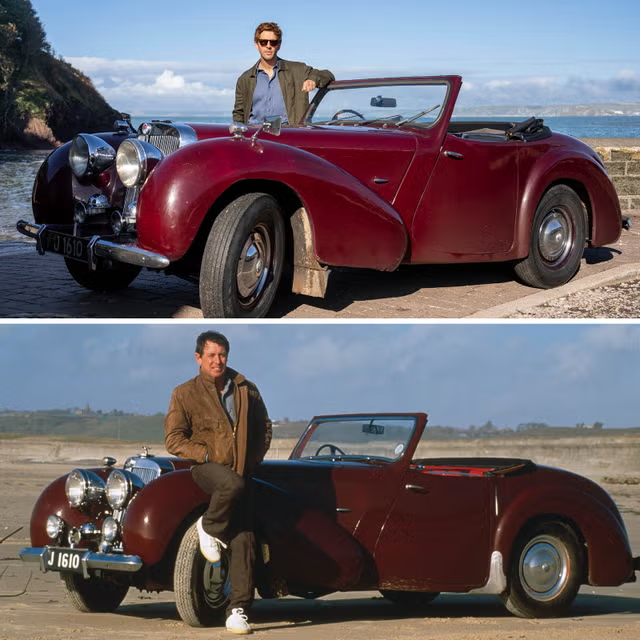
It is, in some ways, the purer piece of television history: the car that started everything, that made J 1610 famous, and that still appears in the opening titles that millions of viewers watched every week throughout the 1980s.
Bergerac Returns: 2025
In early 2025, Bergerac returned to screens as a six-part series on U and U&Drama, produced by Blacklight TV with Jersey-based Westward Studios and supported by Visit Jersey. The new series stars Damiel Molony as a re-imagined Jim Bergerac, with a single character-led murder mystery running across all six episodes rather than the original’s episodic format.
And the Triumph Roadster — one of the original filming cars, still bearing its J 1610 plates — returned with it.
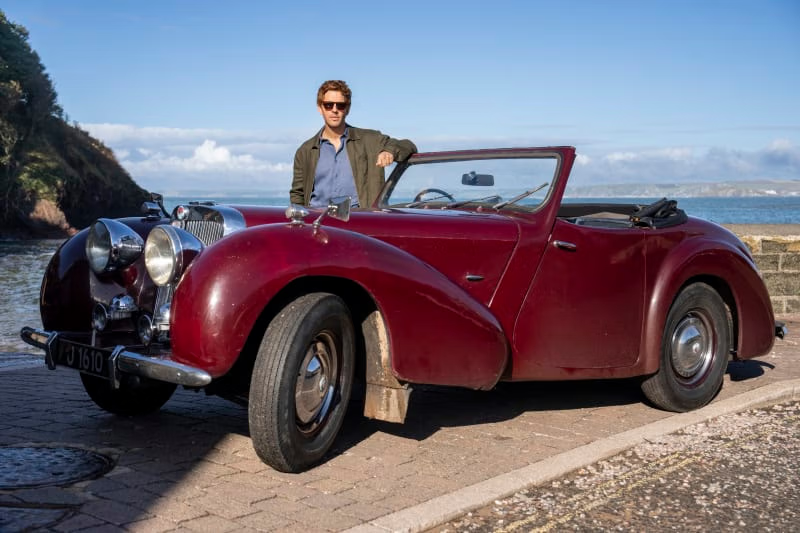
At the announcement, Molony said: “When people talk about Bergerac, two things immediately spring to mind: Jersey, and the car. We’ve recently wrapped on filming, and I’ve had the best time stepping into the role of Jim Bergerac — I’ve even had the privilege of getting behind the wheel of the iconic Triumph Roadster.”
The new series connects directly to 1981 through that shared registration plate — J 1610, the number that has meant Bergerac to audiences for over forty years, and that once, quietly, belonged to two very different cars.
Why the Roadster Worked
The Triumph Roadster succeeded as a character element for reasons that go beyond mere good looks:
For Jersey: An open-topped pre-war-styled roadster suits an island perfectly. The warm weather, coastal roads, and glamorous atmosphere called for something wind-in-hair and visually spectacular. A saloon — any saloon — would have been half the car.
For Bergerac’s character: A flawed, temperamental car for a flawed, temperamental detective. The Roadster’s unreliability — real and considerable, as John Nettles will confirm — mirrored Bergerac’s own. Both were brilliant when working, infuriating when not.
For the audience: In 1981, the Triumph Roadster evoked a Britain that had passed — elegant, unhurried, built with care. It was aspirational and nostalgic simultaneously, matching Jersey’s own quality of existing slightly outside ordinary British life.
Visually: The long bonnet, sweeping wings, and open top photographed magnificently in Jersey’s coastal light. The maroon against blue sea and green lanes created images that defined the show’s identity for a decade.
Specifications at a Glance
Car One: 1947 Triumph 1800 Roadster
- Used in filming: 1981–1985 (Series 1–4)
- Registration: J 1610
- Engine: 1,776cc four-cylinder, 65 bhp
- Top Speed: 75 mph
- Production total: 2,501 built
- Status: Survives in private ownership in Jersey
Car Two: 1949 Triumph 2000 Roadster
- Used in filming: 1985–1991 (Series 5–9)
- Registration (filming): J 1610
- Original registration: KLX 322
- Chassis: TRA 339
- Engine: 2,088cc Vanguard four-cylinder, 68 bhp
- Top Speed: 77 mph
- Production total: 2,000 built
- Auctioned 1991: £37,000 (Children in Need)
- Status: Private ownership, active on the classic car circuit
Total Triumph Roadster production (both models combined): 4,501 cars
The Show
- Title: Bergerac
- Network: BBC One (original); U&Drama (2025 reboot)
- Original run: 1981–1991, nine series
- Peak audience: approximately 15 million viewers
- Star: John Nettles as DS Jim Bergerac (original); Damiel Molony (2025)
- Creator: Robert Banks Stewart
- Setting: Jersey, Channel Islands
Want to explore classic cars from other detective shows? Visit What Classic Car for detailed guides on the Triumph Roadster, Inspector Morse’s Jaguar, Bergerac’s Triumph Roadsters and other iconic vehicles from British television.
“When people talk about Bergerac, two things immediately spring to mind: Jersey, and the car.” — Damiel Molony, 2024