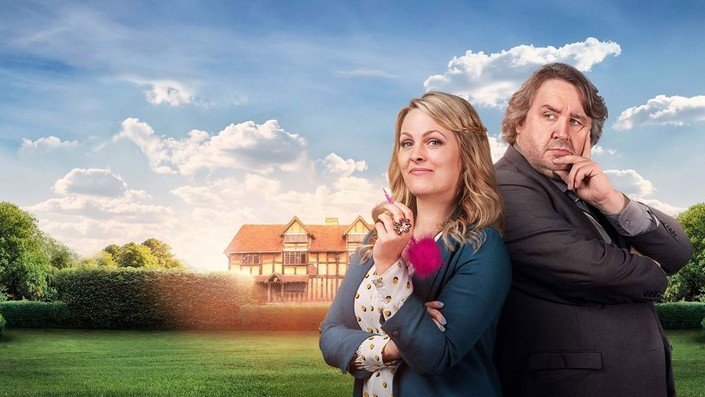
When weary ex-detective Frank Hathaway reluctantly teams up with Luella Shakespeare, a bright and optimistic former hairdresser who's always wanted to be a private investigator, the mismatched pair form an unlikely detective agency in the heart of Stratford-upon-Avon. Aided by Sebastian Brudenell, a theatrical assistant and perpetual understudy with dramatic flair, they solve murders and mysteries amongst the cobbled streets and Tudor buildings of Shakespeare's birthplace, with each case featuring clever references to the Bard's works.
Shakespeare & Hathaway: Private Investigators is a light-hearted British crime drama that premiered on BBC One in 2018, created by Paul Matthew Thompson and the late Jude Tindall. The series offers a refreshing contrast to darker detective dramas, combining murder mysteries with comedy, warmth, and liberal doses of Shakespearean references, all set against the picturesque backdrop of Stratford-upon-Avon, the birthplace of William Shakespeare himself.
The series centres on an unlikely partnership between two very different people. Frank Hathaway is a dishevelled, cynical former police detective who left the force under something of a cloud. He’s set up as a private investigator but struggles to make the business work, operating from a cramped office and taking whatever cases he can get. Frank is grumpy, world-weary, and sceptical, having seen too much of humanity’s darker side during his police career. He’s also, beneath the gruffness, fundamentally decent and surprisingly sensitive, though he’d never admit it.
Luella Shakespeare is Frank’s complete opposite. Bright, cheerful, and relentlessly optimistic, Lu is a former hairdresser who’s always dreamed of being a private investigator. When circumstances bring her into Frank’s orbit, she sees an opportunity to pursue her long-held ambition. Lu is warm-hearted, empathetic, and possessed of excellent people skills honed through years of listening to clients’ problems in the salon. She’s also surprisingly sharp, with excellent instincts and a knack for getting people to confide in her. Where Frank is cynical, Lu sees the best in people; where he’s methodical, she’s intuitive.
The pairing initially seems disastrous. Frank doesn’t want a partner, especially not a cheerful ex-hairdresser with no detective experience. Lu finds Frank’s pessimism and grumpiness challenging. Yet they quickly discover they complement each other perfectly. Frank brings professional expertise, investigative training, and useful police contacts; Lu contributes people skills, enthusiasm, and fresh perspectives unconstrained by standard procedure. Their banter and bickering provide much of the show’s humour, evolving from genuine friction into affectionate squabbling as their partnership deepens.
Sebastian Brudenell, their assistant, adds another dimension to the dynamic. An aspiring actor and member of the Royal Shakespeare Company, Sebastian works for the agency between theatrical roles, which given his perpetual status as understudy rather than lead, means he’s often available. Sebastian is theatrical, dramatic, and prone to delivering observations in iambic pentameter or quoting Shakespeare at inappropriate moments. He’s also surprisingly useful in investigations, able to adopt personas when going undercover and possessing unexpected skills that prove valuable. His earnest enthusiasm and occasional pomposity make him endearing, and his interactions with the more practical Frank and Lu provide comic relief.
The character names themselves are a playful reference to William Shakespeare and his wife Anne Hathaway, with “Luella” being a near-homophone for “Will” and “Frank” for “Anne.” This clever naming sets the tone for a series that delights in wordplay, literary references, and tongue-in-cheek humour whilst telling engaging mystery stories.
The setting of Stratford-upon-Avon is integral to the series’ appeal. The beautiful market town, with its Tudor architecture, cobbled streets, riverside walks, and theatrical heritage, provides stunning locations and unique atmosphere. The presence of the Royal Shakespeare Company and the town’s literary tourism industry naturally weave into storylines, allowing for cases involving actors, writers, theatre productions, and literary festivals. The show serves as an excellent advertisement for Stratford, showcasing its beauty and charm across all seasons.
Each episode is self-contained, following a case-of-the-week format that makes the series accessible to casual viewers whilst rewarding regular watchers with ongoing character development and running jokes. The mysteries themselves are entertaining puzzles rather than gritty crime dramas. Murders occur, but violence is kept off-screen, and the tone remains light despite dealing with serious crimes. The cases often involve quirky elements or unusual settings – murders at bingo halls, hairdressing competitions, care homes, paranormal investigations, or wedding preparations.
Shakespearean references permeate the series, from episode titles drawn from the Bard’s works to plots that echo his plays’ themes and structures. The writers delight in incorporating literary allusions, creating episodes that function as “spot the reference” games for Shakespeare enthusiasts whilst remaining perfectly enjoyable for viewers unfamiliar with the source material. This adds intellectual playfulness without becoming pretentious or excluding those without English literature degrees.
The show’s tone is deliberately cosy and comforting. This is not gritty noir or psychological thriller territory; it’s feel-good television that allows viewers to enjoy murder mysteries without the darkness or disturbing content that characterises many contemporary crime dramas. The production values emphasise warmth and charm – bright cinematography, attractive locations, and a general air of gentleness that makes the series perfect for afternoon viewing or relaxing escapism.
Jo Joyner brings infectious energy and warmth to Luella, making her genuinely likeable without becoming saccharine. She plays Lu’s optimism as genuine rather than naive, showing someone who chooses to see the good in people whilst remaining sharp enough to spot when she’s being deceived. Joyner, previously known for playing Tanya Branning in EastEnders, demonstrates considerable range in creating a character who’s both comic and capable, silly and smart.
Mark Benton perfectly embodies Frank’s grumpy-but-loveable persona. He makes Frank’s cynicism amusing rather than off-putting, showing the kindness beneath the curmudgeonly exterior. Benton excels at physical comedy – Frank’s dishevelled appearance, his reluctant participation in Lu’s more enthusiastic schemes, and his exasperated reactions to Sebastian’s theatricality all land perfectly. He also brings genuine warmth to Frank’s softer moments, making clear that his gruffness is protective armour rather than fundamental nature.
Patrick Walshe McBride makes Sebastian delightfully over-the-top without becoming annoying. His theatrical delivery, dramatic gestures, and earnest commitment to his craft could easily have made Sebastian insufferable, but McBride plays him with such enthusiasm and good nature that he becomes endearing. Sebastian’s occasional moments of surprising competence, when his acting skills or theatrical knowledge prove crucial to cases, add depth to what could have been merely comic relief.
The supporting cast includes various police contacts, most notably DI Christina Marlowe in the first two series and later PC Viola Deacon, who provide official assistance and occasional romantic possibilities for the main characters. The episodic format allows for excellent guest stars, with notable British actors appearing in roles that range from sympathetic victims to flamboyant murderers.
The series explores themes of reinvention and finding purpose. Both Frank and Lu are essentially starting over – he after leaving the police, she after her hairdressing career. They’re both proving themselves in new roles, discovering abilities they didn’t know they possessed, and building something meaningful together. The show celebrates second chances, the value of different perspectives, and how unlikely partnerships can become the most rewarding.
The detective work itself balances traditional investigation with comedic mishaps. Frank and Lu interview witnesses, examine crime scenes, follow leads, and piece together clues using both professional methodology and inspired guesswork. They occasionally go undercover, frequently get into situations they’re not quite prepared for, and sometimes stumble onto solutions as much through luck as deduction. This makes them relatable detectives rather than superhuman sleuths, people who succeed through persistence, teamwork, and genuine care about their clients.
The mysteries are cleverly constructed without being overly complex. The cases involve enough twists to remain engaging, with red herrings and multiple suspects, but solutions are ultimately satisfying and fair to viewers. The show plays the mystery elements straight despite its comedic tone, ensuring that the detective work is genuine and the reveals make logical sense. This balance between comedy and competent mystery plotting distinguishes the series from pure farce whilst keeping it lighter than straight crime drama.
The series has achieved remarkable success, particularly impressive given its daytime broadcast slot. It became the BBC’s second-biggest daytime series, demonstrating significant appetite for lighter crime drama that doesn’t sacrifice intelligence or entertainment value. The show has been compared favourably to Father Brown, another successful BBC daytime mystery series, sharing similar appeal as comforting, engaging television that the whole family can enjoy.
Critical and audience reception has been overwhelmingly positive. Viewers praise the chemistry between the leads, the beautiful locations, the clever writing, and the show’s ability to be simultaneously funny and genuinely mysterious. The series fills a niche for crime drama that’s entertaining without being disturbing, clever without being challenging, and warm without being condescending. It treats its audience with respect whilst providing escapist entertainment.
Five series have aired to date, with a sixth confirmed and currently filming. The show’s longevity demonstrates its sustained popularity and the creators’ ability to keep the format fresh across multiple series. Each series typically comprises ten episodes, allowing for substantial storytelling whilst maintaining quality. The episodic nature means the series can continue indefinitely as long as the leads remain committed and writers keep finding interesting cases for the agency to investigate.
The show also functions as celebration of Shakespearean tradition and British theatrical culture. The setting in Stratford-upon-Avon, Sebastian’s involvement with the RSC, and the constant literary references create affectionate portrait of England’s theatrical heritage. The series suggests that Shakespeare remains relevant, that his works continue to illuminate human nature and behaviour, and that there’s genuine joy in literary tradition when approached with playfulness rather than pomposity.
Shakespeare & Hathaway demonstrates that not all television needs to be dark, gritty, or challenging to be worthwhile. Sometimes viewers want comfort, humour, and gentle entertainment that doesn’t disturb or distress. The series provides exactly that whilst maintaining intelligence and craft in its storytelling. It’s television equivalent of comfort food – satisfying, enjoyable, and leaving viewers feeling better than when they started.
Ultimately, the show succeeds through its commitment to warmth, wit, and the appealing central partnership. Frank and Lu’s relationship – professional partners who genuinely care about each other, bickering like family whilst solving crimes together – provides the emotional foundation that keeps viewers returning. The mysteries entertain, the location charms, the Shakespeare references amuse, but it’s the people solving the crimes who make the series special. Shakespeare & Hathaway proves that cosy crime drama can be intelligent, funny, beautifully produced, and thoroughly entertaining, offering viewers escape into a world where murder happens in picture-perfect settings, eccentric detectives always catch the culprit, and a good cup of tea solves most problems.
Yes, just Register and you will then be able to add notes to every character. Just click/tap on the character. The notes can only be seen by you (when you are Logged In)