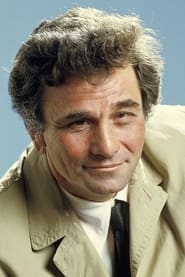
Set primarily in Los Angeles, Columbo follows Lieutenant Columbo, a rumpled, cigar-chomping LAPD homicide detective whose shambling, absent-minded manner disguises a razor-sharp analytical mind. Uniquely structured as an inverted “howcatchem” rather than a traditional whodunit—viewers see the murder committed at the start of every episode—the series follows Columbo as he patiently, politely, and relentlessly circles his wealthy, sophisticated suspects, wearing them down through seemingly innocuous questions until his famous parting line, “Just one more thing,” signals the net finally closing.
Columbo is a landmark American crime drama created by Richard Levinson and William Link, starring Peter Falk in one of television’s most enduring and beloved performances as the eponymous Los Angeles homicide detective. The character first appeared in a 1960 episode of The Chevy Mystery Show titled “Enough Rope,” portrayed by Bert Freed, before Levinson and Link revived him for a stage play and eventually two television pilot films in 1968 and 1971 to convince network executives to commission a full series. Falk took over the role for what would become a 35-year association, appearing in 69 episodes between 1968 and 2003 and winning four Emmy Awards for his performance—a portrayal so complete that, as one retrospective put it, the actor’s own persona seemed indistinguishable from the character he played.
The series aired as part of NBC’s rotating Mystery Movie anthology from 1971 to 1978, appearing roughly every third week alongside McCloud and McMillan and Wife, before being revived by ABC from 1989 through numerous television specials continuing until 2003. Levinson and Link based Columbo partly on Porfiry Petrovich, the cunning, deceptively unassuming police investigator from Dostoevsky’s Crime and Punishment—a lineage that explains the show’s most defining structural innovation: rather than a conventional whodunit withholding the killer’s identity until a final reveal, virtually every episode opens by showing the audience the murder being committed, in full, by a wealthy, sophisticated, and near-always confident perpetrator. The genuine drama, and the show’s enduring pleasure, lies entirely in the “howcatchem”—watching Columbo, seemingly bumbling and unthreatening in his crumpled beige raincoat, ever-present cigar, and battered Peugeot, patiently circle his suspect over the following hour, asking apparently trivial questions, professing confusion, praising the suspect’s cleverness, and gradually, inexorably assembling the case that will bring them down.
Columbo’s investigative method relied almost entirely on psychological pressure rather than physical evidence or dramatic confrontation. His trademark technique—appearing to leave a scene, then turning back at the last moment with a seemingly offhand “just one more thing, sir”—became one of television’s most iconic and imitated character beats, signalling to both the suspect and the audience that the detective’s apparent absent-mindedness had, in fact, concealed a devastatingly precise question all along. This approach allowed the show to sidestep traditional detective-fiction mechanics entirely; there was no mystery to solve in the conventional sense, only the satisfaction of watching intelligence disguised as ineptitude slowly, inevitably dismantle the arrogance of killers who consistently underestimated the man in front of them.
The show’s guest-star casting became legendary in its own right, with a remarkable roster of Hollywood talent taking on the role of Columbo’s wealthy, cultured, invariably doomed murderers across the decades—everyone from William Shatner to Little Richard appeared opposite Falk over the series’ extraordinary run, with the “villain of the week” format allowing top-tier actors the rare pleasure of playing a fully realised, often sympathetic antagonist rather than a straightforward heavy. The series also attracted notable directorial talent, including a young Steven Spielberg, who helmed the acclaimed early episode “Murder by the Book” (1971)—one of his first major professional directing credits, showcasing the unusually high production quality Falk’s influence and NBC’s confidence brought to primetime programming of the era.
Columbo’s setting among Los Angeles’s wealthy elite—film directors, surgeons, art dealers, chess grandmasters, wine connoisseurs, and various other sophisticated professionals—created a recurring class tension at the heart of the show’s appeal. Columbo himself, blue-collar, unglamorous, driving a battered old car and seemingly out of his depth amid his suspects’ opulent homes and rarefied social circles, consistently proved himself their intellectual superior, subverting expectations about class and competence with quiet, persistent satisfaction. This dynamic gave the series a gentle but unmistakable moral clarity: however clever, wealthy, or socially superior the killer believed themselves to be, Columbo’s patient, unglamorous diligence would always win out.
Though its structure and American setting distinguish Columbo from the British cosy crime tradition that dominates much of this catalogue, the show shares essential DNA with the genre’s core appeal—a beloved, non-violent, character-driven detective whose intelligence and moral decency triumph through wit and observation rather than physical confrontation, delivering satisfying, self-contained mysteries with minimal graphic content and a reliably comforting sense of justice served. Columbo’s influence on the broader “inverted detective story” format has proven immense and enduring, directly inspiring numerous subsequent series—including, more recently, Poker Face and Elsbeth—that have explicitly credited Columbo as the template for a howcatchem structure built around a deceptively unthreatening investigator patiently unravelling a crime the audience has already witnessed.
Peter Falk’s performance remains the show’s defining achievement and the reason for its lasting cultural resonance. His portrayal balanced genuine warmth and humour with an unmistakable underlying steel, creating a character who felt entirely authentic rather than merely a collection of eccentric tics—the rumpled raincoat, the cigar, the seemingly perpetual confusion about basic details, all deployed in service of a mind that missed nothing. More than five decades after his television debut and over a decade since Falk’s death in 2011, Columbo remains one of the most fondly remembered and frequently rewatched detective series in television history, its formula so distinctive and enduringly satisfying that “just one more thing” has entered the popular lexicon as instant shorthand for the moment intelligence reveals itself just when everyone least expects it.
Yes, just Register and you will then be able to add notes to every character. Just click/tap on the character. The notes can only be seen by you (when you are Logged In)
Locations
Setting
Los Angeles, California, United States— LAPD homicide detective among LA’s wealthy elite; occasional episodes in London, Mexico, etc.
Filmed in
Los Angeles and Southern California, United States— Extensive LA location filming: Coliseum, Greystone Mansion, Hollywood Forever Cemetery, Stahl House (Prescription: Murder), LAX, etc. Universal Studios Hollywood backlot (New York Street, Singapore Lake, Colonial Mansion)