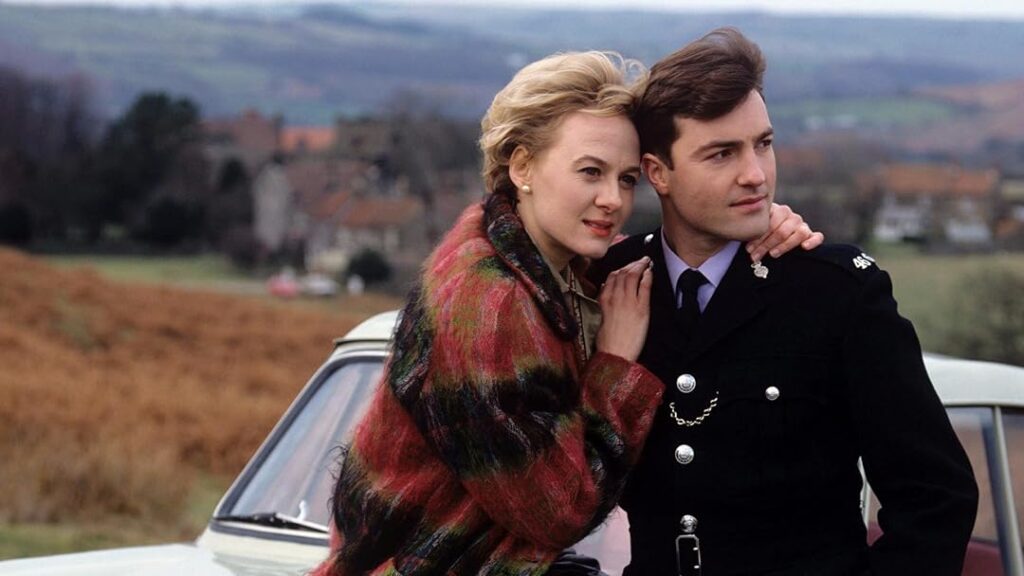
Set in the fictional North Yorkshire village of Aidensfield during the 1960s, Heartbeat follows the lives and adventures of rural police constables, medical staff, and village residents in a nostalgic period drama that combines gentle crime stories with community tales. The series interweaves police work on the bobby's beat with medical storylines and the escapades of loveable local rogues, all set against the beautiful backdrop of the Yorkshire moors and accompanied by classic 1960s pop hits.
Heartbeat is a British police procedural period drama series that became one of ITV’s longest-running and most beloved shows, airing from 10 April 1992 to 12 September 2010 across 18 series and over 350 hour-long episodes. Based on the “Constable” series of novels written by Nicholas Rhea (a former policeman himself), the series was produced initially by Yorkshire Television and later by ITV Studios, creating a warm, nostalgic portrait of rural English life during the 1960s that consistently drew audiences of over 10 million viewers, peaking at 13.82 million in 2001.
The series is set in the North Riding of Yorkshire, centring on the fictional village of Aidensfield and the nearby market town of Ashfordly, with occasional scenes in the real coastal town of Whitby. The programme’s title cleverly references both a policeman’s “beat” (the area they patrol on foot) and the medical “heartbeat,” reflecting the dual focus on police and medical storylines that run through each episode. This interweaving of law enforcement and healthcare creates a holistic view of village life, where the local bobby and the village doctor are central pillars of the tight-knit rural community alongside the vicar and other familiar figures.
The show initially starred Nick Berry as PC Nick Rowan, an idealistic young constable who relocates from London to Aidensfield with his wife Kate (Niamh Cusack), a doctor struggling to gain acceptance in a community unused to female physicians. The early series dealt extensively with their adjustment to rural life, Kate’s medical practice, and their experiences as a young family navigating village dynamics. Tragically, Kate’s storyline ended when she developed leukaemia during pregnancy and died six weeks after giving birth to baby Sarah (whom Nick renamed Katie in her honour). This emotional arc showcased the series’ ability to balance lighthearted village tales with genuine drama and pathos.
As the series evolved over 18 years, cast changes brought new characters while maintaining core figures. Derek Fowlds as Sergeant Oscar Blaketon and William Simons as the shrewd PC Alf Ventress were the only actors to appear in all 18 series, providing continuity throughout the show’s long run. Blaketon began as the authoritative sergeant at Ashfordly Police but was forced to retire due to health issues in Series 7, subsequently taking over the Aidensfield Post Office and later the Aidensfield Arms pub. Other long-running characters included Tricia Penrose as the vivacious Gina Ward, Mark Jordon as PC Phil Bellamy, and various other constables including Jason Durr as PC Mike Bradley, Jonathan Kerrigan, and Philip Franks.
A defining element of Heartbeat’s charm was its “loveable rogue” characters who provided comic relief and get-rich-quick schemes. Bill Maynard’s portrayal of Claude Jeremiah Greengrass—a dishevelled poacher and habitual schemer with his loyal lurcher dog Alfred—became iconic from 1992 to 2000. Greengrass embodied the quirky, self-reliant spirit of rural Yorkshire, constantly devising humorous plots like illicit game hunting on Lord Ashfordly’s estate or minor cons, highlighting the economic pressures faced by small-time opportunists in post-war Britain. After Maynard’s departure, similar roles were filled by Vernon Scripps and later Peggy Armstrong, though fans generally agreed none quite matched Greengrass’s appeal.
The series was meticulously filmed on location around North Yorkshire, with the picturesque village of Goathland serving as Aidensfield (its railway station appearing frequently in episodes). Other prominent filming locations included Whitby, Otley, Scarborough, and various villages across the North Riding. The stunning moorland scenery, period vehicles (those dinky British 1960s cars, motorbikes, and trucks), and authentic period details transported viewers to a simpler time—pre-decimalization, pre-EEC membership, when steam trains still ran and Britain remained largely monocultural.
The 1960s setting was carefully maintained throughout, avoiding the “swinging sixties” and hippie culture in favour of a more grounded, rural perspective on the decade. Episodes featured references to the era’s counterculture movement, post-war austerity, rationing (which continued into the mid-1950s), and social changes, all while the soundtrack featured classic pop hits from artists like The Beatles, Donovan, Dusty Springfield, and numerous cult bands. The theme song was Buddy Holly’s “Heartbeat,” performed by Nick Berry himself.
Each episode typically combined one serious criminal occurrence (theft, poaching, smuggling, domestic disputes, occasional murder) with one lighter storyline, often involving the village characters’ personal lives or the rogue’s latest scheme. The policing depicted was authentic to the period—constables relied on local knowledge, foot patrols, and personal relationships with residents rather than modern forensic technology. This community-oriented approach, drawn from Nicholas Rhea’s own policing experience, showed officers as visible authority figures integrated into village life rather than distant law enforcers.
Heartbeat’s phenomenal success led to a spin-off series, The Royal (2003-2011), set in a 1960s hospital, as well as special episodes and documentaries. The series proved so popular that it became an important part of Yorkshire’s tourist economy, with Heartbeat-themed tours and attractions drawing visitors to the filming locations. When ITV announced cancellation in June 2010 after Series 18, it prompted protests from fans worldwide and from Yorkshire communities who valued the show’s economic contribution.
Nicholas Rhea served as series consultant throughout, advising on 1960s police procedure and other period details while continuing to write new Constable novels. The television adaptation took liberties with his source material—his protagonist PC Nicholas Rhea (married to Mary with four children, transferring from a desk job) became PC Nick Rowan (married to doctor Kate, initially childless, arriving from the Metropolitan Police)—but Rhea embraced these changes and remained intimately involved with bringing his world to television.
The show’s enduring appeal lay in its gentle, feel-good nature and beautiful production values. As one fan noted, it combined good varied characters, creative yet plausible storylines, gorgeous rural English landscape, and nostalgic period details into relaxing, highly enjoyable family viewing. While admittedly unrealistic in depicting nearly constant crime in what would otherwise be a peaceful village, this was necessary to maintain dramatic interest across hundreds of episodes.
Heartbeat represents classic British period drama at its most comforting—beautifully filmed, warmly acted, and thoroughly decent. It offered viewers an escape to a simpler time, where community mattered, problems were solvable, and life moved at a gentler pace. For 18 years, millions tuned in every Sunday evening to visit Aidensfield, making Heartbeat not just a television success but a cultural institution and a nostalgic touchstone for audiences seeking quality family entertainment rooted in an idealized vision of British rural life.
Yes, just Register and you will then be able to add notes to every character. Just click/tap on the character. The notes can only be seen by you (when you are Logged In)
🔒 More characters will unlock as you update your progress
Credits and More
Credits
📚 Original Author
Nicholas Rhea (the pen name of Peter Norman Walker, 1936-2017) was a former North Yorkshire police officer who drew on his extensive law enforcement experience to create the "Constable" series of novels that inspired Heartbeat. During his 35-year policing career, Walker served in rural North Yorkshire villages, experiencing firsthand the community-oriented policing of small market towns and moorland communities that would form the foundation of his fiction. Under the Nicholas Rhea pseudonym, he wrote over 30 Constable books featuring PC Nicholas Rhea (named after himself), married to Mary with four children, patrolling fictional Yorkshire villages in the 1960s. His authentic portrayal of rural policing—where constables knew every resident personally, relied on foot patrols and local knowledge rather than forensic technology, and served as integrated community figures—came directly from his own memories of policing in that era. Rhea remained intimately involved with the television adaptation, serving as series consultant for both Yorkshire Television and ITV throughout Heartbeat's 18-year run, advising on 1960s police procedure, period details, and village life authenticity while continuing to write new Constable novels. Though the TV series took significant liberties with his original characters and storylines, Rhea embraced these changes and delighted in seeing his fictional world brought to life on screen, reaching millions of viewers who shared his nostalgia for post-war rural England.
🎬 TV Series Creator
Heartbeat was developed and produced by Yorkshire Television (later ITV Studios) as a vehicle specifically designed for actor Nick Berry, who had recently left his role in EastEnders and was looking for a new starring vehicle. The series was originally planned with Berry in mind for the lead role of the idealistic young constable, which influenced the decision to adapt Nicholas Rhea's Constable novels rather than develop an entirely original concept. Production began in summer 2012 with filming across the North Riding of Yorkshire, establishing the picturesque village of Goathland as the fictional Aidensfield, with its church, railway station, and surrounding moorland becoming instantly recognizable to viewers. The decision to set the series firmly in the 1960s rather than following the books' 1911-1936 timeline was deliberate, tapping into nostalgia for post-war Britain while allowing for relatable storylines about social change, women's rights, and community evolution. Early producers and writers consciously avoided the "swinging sixties" culture and hippie movement, instead focusing on rural life largely untouched by London's cultural revolution, creating a gentle, family-friendly drama that would work perfectly in ITV's Sunday evening slot. The production team made strategic decisions to interweave medical storylines with police work (hence the dual meaning of "Heartbeat"), establish recurring "loveable rogue" characters for comic relief, and use authentic period music as both soundtrack and cultural marker. These creative choices transformed Rhea's police procedurals into a warm ensemble piece about community life, proving so successful that Heartbeat became ITV's longest-running period drama and spawned the hospital-set spin-off The Royal, cementing Yorkshire Television's reputation for quality period drama production.