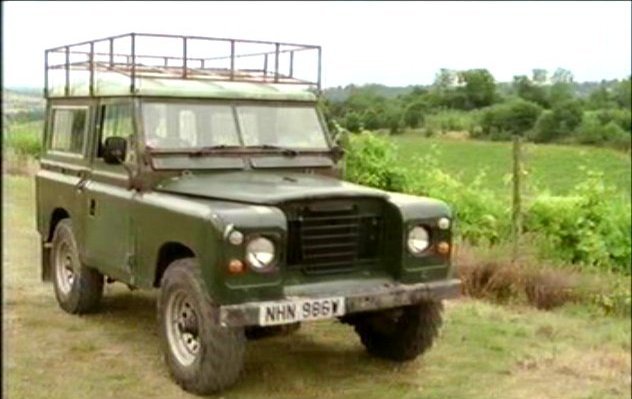
In the gentle world of British cozy mysteries, few vehicles have been as perfectly cast as “The Wagon”—the battered, green 1980 Land Rover Series III that transported gardening detectives Rosemary Boxer and Laura Thyme through three series of horticultural homicides. From 2003 to 2007, this dilapidated but dependable Land Rover appeared in stunning gardens across Britain and Europe, its gears loudly complaining but never quite giving up, much like its determined owner. Unlike Gene Hunt’s flashy Cortina or Morse’s elegant Jaguar, The Wagon was refreshingly unpretentious—a working vehicle for working women who happened to stumble upon murder wherever they planted their trowels.
The Car: The Wagon
Rosemary Boxer’s 1980 Land Rover Series III 88″ Station Wagon became affectionately known as “The Wagon” throughout the series—a nickname that perfectly captured its utilitarian character and Rosemary’s no-nonsense approach to life.
Specifications
Model: Land Rover Series III 88″ Station Wagon
Year: 1980 (some sources suggest 1981)
Colour: Army green (originally red before being repainted for television)
Nickname: “The Wagon”
Engine: Likely 2.25-litre diesel (based on typical Series III specification)
Condition: “Somewhat dilapidated” with occasional breakdowns
Character: Tough as nails, slightly temperamental, irreplaceable
The Land Rover appeared in every episode of Rosemary & Thyme except one across all three series, making it almost as much a character as Felicity Kendal and Pam Ferris themselves. Its army green paintwork, weathered appearance, and reluctant gearbox provided both transport and comic relief as Rosemary and Laura navigated country lanes, grand estates, and continental adventures.
A Car With History
The Wagon wasn’t just a prop—it was a real Land Rover with character and quirks. Before the series began, it was red, but the production’s makeup artist gave it a makeover in green paint to better suit the gardening theme and create the “shabby chic” look that became so beloved.
According to behind-the-scenes accounts, Felicity Kendal insisted on modifications to make The Wagon more comfortable for filming. The original seat belts, fitted much lower on 1980 Series III models, would cut across her upper body due to her slender frame, so a special seat belt was fitted for her comfort during long days of filming.
Interestingly, while Felicity loved driving The Wagon, her co-star Pam Ferris reportedly “did not get on too well with the gears,” though both actresses wrote fondly of the vehicle after filming ended.
The Show: Rosemary & Thyme (2003-2007)
Two Women, One Land Rover, Countless Murders
Rosemary & Thyme premiered on ITV on 31 August 2003 and quickly became a beloved entry in the cozy mystery genre. The series ran for three series comprising 22 episodes total, concluding in 2007.
The premise was delightfully simple: two professional gardeners, brought together by chance and shared loss, discover that wherever they work, murder tends to bloom alongside the roses. Their shared love of horticulture—and their combined expertise in plant pathology and practical policing—makes them an unlikely but effective detective duo.
Created for Love of Gardening
Rosemary & Thyme was created by Brian Eastman specifically to entertain his wife, Christabel Albery, who was an avid gardener. This personal touch shows in every episode—the gardens are real, the horticultural details are accurate, and the love of plants is genuine rather than superficial.
The series’ title comes from the traditional English folk song “Scarborough Fair,” made famous by Simon & Garfunkel: “Are you going to Scarborough Fair? Parsley, sage, rosemary, and thyme…” The herbs in the song represent the qualities the show embodied: parsley for comfort, sage for strength, rosemary for remembrance, and thyme for courage.
Production and Reception
The show was directed by Brian Farnham (10 episodes, 2003-2006), Simon Langton (8 episodes, 2004-2006), Tom Clegg (3 episodes, 2003), and Gwennan Sage (1 episode, 2004). The scripts were contributed by multiple writers, with Clive Exton (who helped create the show) writing 10 of the 22 episodes.
Music was composed and conducted by Christopher Gunning, with the opening theme performed by classical guitarist John Williams, giving the show a gentle, folksy feel that perfectly matched its garden settings.
Despite strong viewership and critical acclaim, ITV cancelled the series in May 2006 after three series. ITV boss Simon Shaps explained it was part of a “painful but utterly necessary process” to reinvigorate the network, stating: “We will drop programmes which by the criteria of most of our competitors are still performing incredibly well. Because we know that volume without value is no longer enough.”
This decision disappointed fans on both sides of the Atlantic, with many considering it a perfect example of quality programming being sacrificed for ratings strategy.
The Characters Behind the Wheel
Rosemary Boxer (Felicity Kendal)
Dr. Rosemary Boxer holds a doctorate in plant pathology and was a University of Malmesbury lecturer in applied horticulture for eighteen years before being suddenly and sneakily fired by Professor Julian Marchant (who was also a former beau) in the pilot episode “And No Birds Sing.”
Rosemary is:
- Smart, practical, and happily single
- “More bookworm than earthworm” (her own description)
- An expert in the theoretical side of horticulture rather than the practical
- The owner of The Wagon, which she refuses to replace despite its frequent breakdowns
- Independent, curious, and possessed of instincts that rarely let her down
- Quick-tempered when provoked (she punched her ex-boss who fired her)
Felicity Kendal brings energy, humor, and perky determination to the role. Her Rosemary is intellectual without being condescending, knowledgeable without being boring, and capable of both academic analysis and getting her hands dirty.
Laura Thyme (Pam Ferris)
Laura Thyme is a former police constable who has recently been left by her husband for a younger woman. After years as a homemaker and police wife, she finds herself starting over in middle age.
Laura is:
- An avid gardener with extensive practical knowledge about plants and garden design
- Good-natured, resilient, and kind
- The “earthworm” to Rosemary’s “bookworm”
- Still connected to police work through her son Matthew (Ryan Philpott), who serves as a police officer
- The emotional heart of the partnership
- More cautious and traditional than Rosemary, but with hidden depths
Pam Ferris (who would later appear as Sister Evangelina in Call the Midwife) gives Laura warmth, dignity, and quiet strength. Her performance grounds Rosemary’s intellectual flights with practical common sense and genuine compassion.
The Perfect Partnership
What makes Rosemary and Laura work so brilliantly as a team is their complementary skills:
Rosemary brings:
- Academic knowledge of plants, diseases, and toxins
- Analytical thinking and deductive reasoning
- Connections in the academic and horticultural worlds
- Fearlessness and determination
- The Wagon
Laura brings:
- Police training and investigative experience
- Practical gardening skills and hands-on knowledge
- People skills and empathy
- Connections in law enforcement through her son
- Wisdom from life experience
Together, they solve crimes that often involve plant-based poisons, garden accidents that aren’t accidents, and family secrets buried as deep as bulbs in autumn.
The Land Rover Series III: British Engineering Icon
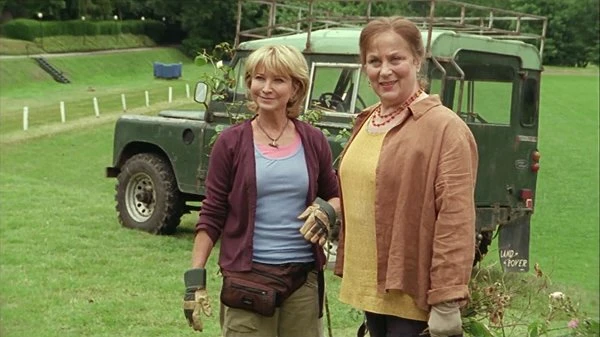
The Land Rover Series III, produced from 1971 to 1985, represented the final evolution of the original Land Rover concept before the introduction of the more refined Ninety and One Ten (later Defender) models.
A Brief History
The Series III was an evolution rather than a revolution from the Series IIA it replaced:
Key Features:
- More comfortable interior with improved sound insulation
- Updated dashboard layout
- Synchromesh gearbox on all forward gears (a major improvement)
- Better heating and ventilation
- Refined suspension
- More modern appearance while retaining the classic look
The 88″ Station Wagon
Rosemary’s Land Rover was an 88″ (short wheelbase) Station Wagon—the most versatile and popular Series III configuration.
Technical Specifications (Typical 1980 Series III 88″):
- Engine: Most likely 2.25-litre diesel (2,286cc) four-cylinder
- Power: Approximately 62 bhp
- Transmission: 4-speed manual with synchromesh
- Drive: Permanent four-wheel drive with selectable high/low range
- Top Speed: Around 65 mph
- Fuel Economy: Approximately 25-30 mpg
- Payload: Up to 1,000 kg
- Seating: 7 (driver + passenger + 5 in rear)
The Station Wagon body style featured:
- Enclosed rear with side windows
- Fold-down rear seats for cargo
- Hardtop construction (as opposed to canvas)
- Rear door access
- Better weather protection than pickup variants
Character and Capability
By 1980, the Series III represented proven Land Rover engineering—simple, robust, agricultural, and almost impossible to break irreparably. These were vehicles designed to be fixed with a hammer and wire in the middle of nowhere, which made them perfect for traveling between garden jobs across Britain and Europe.
The diesel engine was:
- Economical but slow
- Reliable if maintained
- Noisy and agricultural
- Capable of running on almost anything diesel-shaped
The gearbox was:
- Heavy and agricultural
- Prone to loud complaints (as frequently heard in the show)
- Requiring definite, deliberate shifts
- Built to last forever
The four-wheel drive system made The Wagon capable of accessing remote gardens, navigating muddy estate driveways, and handling British weather without complaint.
The Wagon’s Role in Rosemary & Thyme
Throughout the series, The Wagon served multiple narrative and practical functions:
1. Transport and Character Establishment
The Wagon immediately established Rosemary as:
- Practical rather than pretentious
- Someone who values reliability over appearance
- Independent (she has her own transport)
- Unpretentious (no flashy sports car for this academic)
- Slightly eccentric (most people would have replaced it)
When we first see Rosemary driving too fast down country lanes in a battered green Land Rover, we know everything we need to know about her character.
2. Comic Relief
The Wagon’s tendency to break down, its loud gears, and its general temperamental nature provided gentle comic moments throughout the series:
- Rosemary having to raise the bonnet to make adjustments (usually at inconvenient moments)
- The gears grinding loudly during tense chases
- Steam, smoke, or mysterious mechanical complaints
- Laura’s difficulty with the agricultural gearbox
- Rosemary’s absolute refusal to replace it despite constant problems
These moments never felt forced—they were natural consequences of driving a 20+ year old Land Rover Series III.
3. Practical Filming Vehicle
The Wagon served genuine practical purposes:
- Carrying tools, peat, plants, and equipment
- Accessing remote filming locations
- Providing interior space for dialogue scenes
- Representing authentic gardening business transport
The Land Rover wasn’t just decoration—it was functional transport for the characters’ actual work.
4. Visual Identity
The army green Land Rover became as much a visual signature of Rosemary & Thyme as the gardens themselves. Its weathered appearance, distinctive shape, and familiar green color made it instantly recognizable and tied the show to British rural traditions.
5. Plot Device
On several occasions, The Wagon directly contributed to plot developments:
- Being rammed by a villain during a car chase
- Breaking down at crucial moments (creating time pressure or forcing characters together)
- Carrying evidence or clues in the back
- Providing escape transport
- Being spotted at locations, establishing character presence
Memorable Wagon Moments
Throughout the series, The Wagon featured in numerous memorable scenes:
“And No Birds Sing” (Series 1, Episode 1): Rosemary is introduced driving too fast down country lanes, immediately establishing both her character and her relationship with The Wagon.
Various episodes: Rosemary performing roadside repairs, bonnet raised, muttering about recalcitrant British engineering while Laura stands by offering encouragement.
Chase sequences: The Wagon, despite its age and limitations, being pressed into pursuit of suspects or fleeing from danger, gears complaining audibly.
The ramming incident: A villain pursuing Rosemary and Laura in a car chase rams The Wagon, leaving it with additional “battle scars” that it wore proudly for subsequent episodes.
Continental adventures: The Wagon making the journey to France, Italy, and other European locations, proving that even an aging Land Rover can handle adventure tourism.
Location, Location, Location
Rosemary & Thyme was filmed in stunning locations across Britain and Europe, with The Wagon appearing at:
British locations:
- Grand country estates and stately homes
- University gardens and botanical collections
- Urban allotments and community gardens
- Rural villages and farms
- Historic properties and National Trust sites
European locations:
- French Riviera gardens
- Italian coastal estates
- Portuguese gardens
- Spanish historic properties
- Malaga’s historic Alcazaba (April 2005)
Due to short British summers, the production filmed two episodes each season in overseas locations, giving The Wagon its European adventures and proving that Series III Land Rovers are happiest when wandering far from home.
A Portugal Cancellation
Interestingly, two stories set in Portugal were originally planned for filming. However, production changes caused delays, and by the time filming could be rescheduled, some actors were committed to other projects. This contributed to ITV’s decision to cancel the fourth series rather than continue without key cast members.
After the Cameras Stopped
When Rosemary & Thyme concluded filming, The Wagon’s story didn’t end—it began a new chapter.
Donation to Charity
Felicity Kendal took possession of The Wagon after filming and generously donated it to the Flicka Foundation, a donkey sanctuary in Cornwall where one of the episodes had been filmed. Kendal became a patron of the sanctuary, and The Wagon found new purpose.
At the sanctuary, The Wagon was:
- Used by staff to transport food and bedding to donkeys across fields
- Given some maintenance work and exterior repainting by friends of the charity
- Eventually placed on display in a barn as a piece of television history
“Barn Find” and Auction
Years later, The Wagon reappeared on the classic car market as a “barn find” collector’s item, its television provenance adding significant value to what would otherwise be a fairly ordinary (if well-used) Series III.
The listing noted:
- Only 37,000 miles on the clock (genuinely low for a 1980 Land Rover)
- Engine ran well, starting reliably
- No MOT (would need transport away)
- Retained “random paint marks and battle scars” from filming
- Still showed signs of the ramming scene damage
- “Shabby chic look” preserved
The seller noted it was a “rare gem because of her history” and that it “often puts smiles on the faces of passers by.”
Land Rover enthusiasts had mixed reactions. Some appreciated the television history, while others noted:
- The 2003 MOT certificate listed the color as RED, confirming it was repainted for television
- The chassis showed extensive welded repairs (typical for a Series III of this age)
- The “television provenance” was being overvalued compared to actual condition
- It needed significant work to be roadworthy again
Nevertheless, The Wagon found a buyer who appreciated its unique history as much as its mechanical state.
The Series III in Popular Culture
Land Rover Series III vehicles have appeared in numerous British television productions, valued for:
- Authentic British character
- Period correctness (1970s-1980s settings)
- Reliability during filming
- Distinctive appearance
- Practical capability
Other detective/mystery shows featuring Series III Land Rovers:
- The Coroner (another female detective, another Series III)
- Last Tango in Halifax (originally featured a red Series III, later replaced)
- Various countryside and wildlife programs
The Series III seems particularly suited to British television—it’s unpretentious, capable, distinctively British, and photogenic in rural settings.
Why The Wagon Worked So Perfectly
The success of The Wagon as a character element came from perfect alignment between vehicle, characters, and show:
1. Authentic to Character
Rosemary Boxer, academic horticulturalist, would absolutely drive a Series III Land Rover:
- Practical for her gardening business
- Intellectual choice (appreciating engineering honesty)
- Unpretentious despite her doctorate
- Independent (not reliant on others for transport)
- Stubborn (refusing to replace it despite problems)
2. Authentic to Setting
A Land Rover Series III was perfect for the show’s settings:
- Appropriate for visiting country estates
- Capable of handling rough estate driveways
- Common enough not to draw attention
- Practical for carrying tools and plants
- Weatherproof for British filming conditions
3. Visual Character
The Wagon added visual interest:
- Distinctive green color stood out
- Weathered appearance added character
- Recognizable British icon
- Contrasted beautifully with manicured gardens
- Photographed well in countryside settings
4. Comic Potential
The vehicle’s age and temperament provided gentle humor:
- Mechanical complaints at dramatic moments
- Rosemary’s ongoing relationship with aging machinery
- Visual comedy of repairs and breakdowns
- Laura’s difficulty with the gears
- The contrast between refined gardens and rough transport
5. Cozy Mystery Aesthetic
The Wagon perfectly embodied the cozy mystery genre:
- Familiar and comforting
- Unpretentious and accessible
- Slightly quirky without being absurd
- British without being stereotypical
- Reliable at heart despite surface problems
The Cozy Mystery Genre
Rosemary & Thyme exemplifies the cozy mystery genre that British television does so well:
Characteristics:
- Murder without graphic violence or gore
- Amateur detectives with expertise outside law enforcement
- Character-driven narratives
- Beautiful settings (gardens, estates, villages)
- Gentle humor mixed with mystery
- Justice served without cynicism
- Warm relationships and found family
The show has been described as “Murder, She Gardened”—a reference to Murder, She Wrote—and the comparison is apt. Like Jessica Fletcher, Rosemary and Laura combine professional expertise, life experience, natural curiosity, and moral compass to solve crimes that baffle local police.
The Gardening Hook
What distinguishes Rosemary & Thyme is its genuine engagement with horticulture:
- Real botanical knowledge and accurate plant information
- Gardens as settings and as plot elements
- Plant-based poisons and garden “accidents”
- Horticultural mysteries (blights, diseases, deaths)
- Gardening wisdom and tips woven into episodes
- Respect for the profession and its practitioners
The show treats gardening seriously while using it as a unique lens through which to view crime and mystery.
Reception and Legacy
Despite cancellation after three series, Rosemary & Thyme developed a devoted following:
Critical Reception
The show received warm reviews for:
- The chemistry between Kendal and Ferris
- Beautiful production values and locations
- Gentle, non-violent approach to mystery
- Quality writing and clever plots
- Guest star appearances (Anthony Andrews, Julian Wadham, Phyllida Law, Oliver Ford Davies)
- Christopher Gunning’s music
Critics appreciated that it featured:
- Two women over 40 as leads
- Characters not defined by relationships with men
- Professional women using expertise to solve problems
- Platonic female friendship as central relationship
- Realistic portrayals rather than “babes”
Fan Following
The show developed strong fan loyalty:
- Active online communities discussing episodes
- DVD sales remain steady
- Streaming viewership continues
- Comparisons to Agatha Christie and Midsomer Murders
- Appreciation from gardening enthusiasts
- Cross-generational appeal
Fans particularly valued:
- The show’s gentle tone
- Beautiful garden locations
- The relationship between Rosemary and Laura
- Educational aspects about plants and gardening
- The complete series availability for binge-watching
Influence
Rosemary & Thyme influenced subsequent British mystery programming:
- Demonstrated appetite for female-led cozy mysteries
- Proved specialist knowledge (gardening, antiques, art) could anchor detective shows
- Showed that violence isn’t necessary for engaging mysteries
- Encouraged location-based storytelling
- Supported market for gentle, intelligent programming
What Made It Special
In retrospect, Rosemary & Thyme succeeded because of several key elements:
1. The Perfect Pairing
Felicity Kendal and Pam Ferris created television magic. Their chemistry was genuine, their characters were distinct, and their friendship felt real. They elevated every script with performances that balanced humor, intelligence, warmth, and determination.
2. Respect for Audience
The show trusted viewers to:
- Appreciate gentle storytelling
- Enjoy mysteries without graphic violence
- Value character over action
- Learn about gardening while being entertained
- Follow complex plots without hand-holding
3. Production Quality
Every episode featured:
- Stunning locations and garden settings
- Quality cinematography
- Excellent music
- Strong guest casts
- Authentic period and class details
- Respect for subject matter
4. The Wagon
That battered green Land Rover Series III became an essential part of the show’s identity—reliable, quirky, practical, and utterly British. It grounded the show in reality while providing gentle comedy and visual continuity.
Series Overview
Series 1 (2003) – 8 episodes
- “And No Birds Sing” (pilot)
- “Arabica and the Early Spider”
- “The Language of Flowers”
- “Sweet Angelica”
- “A Simple Plot”
- “The Tree of Death”
- “The Memory of Water: Part One”
- “The Memory of Water: Part Two”
Series 2 (2004-2005) – 7 episodes + 2 specials
- “Orpheus in the Undergrowth”
- “Swords into Ploughshares”
- “The Cup of Silence”
- “The Gongoozlers”
- “The Italian Rapscallion”
- “Enter Two Murderers”
- “The Invisible Worm”
- Plus two feature-length specials
Series 3 (2006-2007) – 7 episodes
- “The Maddest Folly”
- “Down the Garden Path”
- “The Convent Garden”
- “The Invisible Worm”
- “Orpheus in the Undergrowth”
- “The Gooseberry Bush”
- “The Memory of Water”
Total: 22 episodes plus 2 feature-length specials (2003-2007)
Companion Viewing
If you enjoyed Rosemary & Thyme, you might also appreciate:
Similar British Mysteries:
- Midsomer Murders (countryside murders with beautiful locations)
- Father Brown (gentle priest detective)
- Miss Fisher’s Murder Mysteries (female amateur detective, Australian)
- The Coroner (female detective, another Land Rover!)
- Agatha Raisin (amateur female detective in Cotswolds)
- Shakespeare & Hathaway (private investigators in Stratford)
For Gardening + Mystery:
- The Bletchley Circle (different tone but clever women solving crimes)
- Call the Midwife (features Pam Ferris; not mystery but similar warmth)
- All Creatures Great and Small (countryside professional expertise setting)
Land Rovers: The Preferred Vehicle for British Detectives
Rosemary’s Wagon is far from the only Land Rover to feature in British detective television. In fact, Land Rovers—particularly Defenders and Series III models—have become something of a genre staple for British mystery shows, especially those featuring rural or coastal settings.
Death in Paradise (2011-Present)
Vehicle: Land Rover Defender 110 Station Wagon
Specifications: 1996 300Tdi (Series 1-3), then 2003 Td5 (Series 4 onwards)
Colour: Yellow and blue police livery with white roof
Role: Main police transport for Honoré Police Station on the fictional Caribbean island of Saint-Marie
The sunny BBC series Death in Paradise features a distinctive yellow and blue Defender 110 as the primary police vehicle. The show, which has run for over a decade with multiple lead detectives (Ben Miller, Kris Marshall, Ardal O’Hanlon, Ralf Little, and Don Gilet), consistently uses the Defender as transport around the fictional island.
Interestingly, some actors in the series mistakenly called it a “Jeep,” much to the annoyance of Land Rover enthusiasts watching at home. The production upgraded from a 300Tdi to a Td5 from Series 4 onwards, with newer alloy wheels visible to eagle-eyed viewers.
The choice of a Defender 110 makes perfect sense for a Caribbean island setting—robust, capable of handling rough terrain, spacious for police equipment, and with an open-air feel appropriate for tropical climates.
Vera (2011-2025)
Vehicle: Land Rover Defender 90 TDi
Registration: P392 SUM
Year: 1996
Colour: Blue
Modifications: Converted from manual to automatic transmission
Perhaps the most famous detective Land Rover after The Wagon, DCI Vera Stanhope’s blue Defender 90 appeared throughout ITV’s Vera series. The 1996 Defender was her late father’s vehicle, and Vera drove it throughout all 14 series despite being offered modern pool cars.
The vehicle was modified from manual to automatic transmission because actress Brenda Blethyn doesn’t hold a manual driving license—a practical consideration that became part of the show’s continuity.
The Defender perfectly suited Vera’s character—no-nonsense, practical, weathered but reliable, and utterly authentic to Northumberland’s rural setting. For more on Vera’s Defender, see our dedicated article about this iconic detective vehicle.
The Coroner (2015-2016)
Vehicle: Land Rover Series III 88″ Soft Top
Registration: YVH 812R
Year: 1977
Colour: Blue
Source: Supplied by Huddersfield Land Rover Centre
The BBC’s short-lived but beloved series The Coroner featured coroner Jane Kennedy (Claire Goose) driving a blue 1977 Series III 88″ soft top. The show was set in a fictional South Devon coastal town and ran for two series (20 episodes) before cancellation in 2017.
The Series III was supplied specifically for the production by Huddersfield Land Rover Centre and became a recognizable part of the show’s visual identity. Like The Wagon in Rosemary & Thyme, the Series III represented practical, no-nonsense transport appropriate for a professional woman working in rural coastal settings.
One reviewer noted: “To be fair, I think the Landy was the best actor in it”—high praise indeed for a 1977 Series III!
Doc Martin (2004-2022)
Vehicle: Land Rover Defender 90 TD5
Registration: V-reg
Colour: Various (including green)
The medical comedy-drama Doc Martin, set in the fictional Cornish village of Portwenn, featured a Defender 90 TD5 in various episodes. The show originally used a 300Tdi in earlier series before upgrading to a TD5, mirroring the progression seen in Death in Paradise.
The Defender fits perfectly with Doc Martin’s Cornish coastal setting, representing the rural, practical nature of the village and its inhabitants.
Why Land Rovers in Detective Shows?
The prevalence of Land Rovers—particularly Defenders and Series IIIs—in British detective television isn’t accidental. These vehicles offer unique advantages for television production and character development:
1. Authenticity to Setting
- Rural and coastal areas of Britain genuinely use Land Rovers extensively
- Police forces, farmers, and rural professionals commonly drive them
- Immediately establishes location and character background
2. Visual Character
- Distinctive, instantly recognizable British design
- Weathered Land Rovers suggest lived-in authenticity
- Different from typical police vehicles, establishing independence
3. Practical Filming Benefits
- Robust enough to handle location filming
- High driving position provides good camera angles
- Interior space allows filming dialogue scenes
- Can access remote filming locations
4. Character Establishment
- Practical rather than pretentious
- Suggests self-sufficiency and capability
- Often hand-me-down vehicles (adding backstory)
- British heritage and engineering
5. Genre Association
- Land Rovers now associated with cozy British mysteries
- Viewers recognize them as markers of the genre
- Create visual continuity with other successful shows
The Series III vs. Defender Divide
Interestingly, there’s a rough divide between Series III and Defender choices:
Series III vehicles (Rosemary & Thyme, The Coroner) tend to appear in:
- Shows set in earlier periods or with period feel
- Character-driven cozy mysteries
- Situations where age and quirks add character
- Female-led series emphasizing practicality over machismo
Defenders (Vera, Death in Paradise, Doc Martin) tend to appear in:
- Contemporary settings
- More action-oriented mysteries
- Professional police work
- Shows requiring more robust/reliable vehicles
Both serve the same narrative purpose—establishing character, location, and genre—but with slightly different flavors.
A British Television Tradition
The use of Land Rovers in British detective television has become something of a tradition, particularly for:
- Rural mysteries (Vera, The Coroner)
- Female detectives (Rosemary & Thyme, Vera, The Coroner)
- Coastal settings (Death in Paradise, The Coroner, Doc Martin)
- Character-driven cozy mysteries
This tradition likely stems from the success of early examples (particularly Rosemary & Thyme and Vera) proving that aged Land Rovers could become beloved character elements rather than mere transport.
The Land Rover Effect
The prevalence of Land Rovers in detective shows has created interesting secondary effects:
For Viewers:
- Instant genre recognition (“Oh, they’re driving a Land Rover—must be a British mystery”)
- Nostalgic appeal and comfort
- Association with quality British television
For Production:
- Established visual shorthand for character types
- Easy sourcing (many available for hire)
- Strong association with British settings
- Cost-effective (older Land Rovers are relatively affordable)
For Land Rover Enthusiasts:
- Increased visibility for classic Land Rovers
- Potential value increases for “television cars”
- New audiences appreciating Series IIIs and Defenders
- Online communities discussing accuracy and specifications
The Cultural Impact of The Wagon
While The Wagon never achieved the iconic status of Morse’s Jaguar or Gene Hunt’s Cortina, it perfectly served its purpose as:
- A working vehicle for working women
- A symbol of practicality over pretension
- A reliable character element
- A visual signature of the show
- A gentle source of comedy
The Land Rover Series III represented everything Rosemary & Thyme valued:
- Substance over style
- Reliability despite age
- British character and capability
- Honest, straightforward engineering
- Getting the job done without fuss
Conclusion: Gardens, Mysteries, and a Green Land Rover
Rosemary & Thyme offered something increasingly rare in modern television—gentle, intelligent mystery storytelling that respected both its characters and its audience. Set among stunning gardens across Britain and Europe, featuring two remarkable women solving crimes with expertise and determination, and grounded by a faithful green Land Rover that refused to give up despite age and wear, the show created a world viewers wanted to visit week after week.
The Wagon—Rosemary’s battered 1980 Land Rover Series III—was never the star of the show, but it was always present, always dependable (mostly), and always authentically itself. Like the show it served, The Wagon didn’t need to be flashy or perfect to be perfectly right.
When Felicity Kendal and Pam Ferris climbed into that green Land Rover, viewers knew they were in for beautiful gardens, intriguing mysteries, genuine friendship, and gentle humor. The gears might complain, the engine might hesitate, and repairs might be needed, but The Wagon would always get Rosemary and Laura where they needed to go.
In a television landscape increasingly dominated by dark, violent, cynical programming, Rosemary & Thyme and The Wagon represented something different—proof that you could be both gentle and compelling, both cozy and clever, both unpretentious and excellent.
As Rosemary might say while raising The Wagon’s bonnet for another adjustment: “Just needs a bit of TLC. She’ll be fine. Always is.”
Want to know more about classic cars from detective shows? Visit What Classic Car for detailed articles on Land Rover Series III models, other iconic detective vehicles, and classic 4×4 buyer’s guides.
Specifications Summary
Rosemary’s Wagon
- Model: Land Rover Series III 88″ Station Wagon
- Year: 1980 (possibly 1981)
- Engine: Likely 2.25-litre diesel four-cylinder
- Colour: Army green (originally red, repainted for show)
- Nickname: “The Wagon”
- Condition: “Somewhat dilapidated” with occasional breakdowns
- Mileage: Approximately 37,000 miles (2010s listing)
- Series Appearances: Every episode except one (2003-2007)
- Current Status: Former television prop, sold to private buyer
Land Rover Series III 88″ General Specs
- Production: 1971-1985
- Engine Options: 2.25L petrol/diesel, 2.6L inline-six, 3.5L V8 (late models)
- Power: 62 bhp (2.25 diesel), 77 bhp (2.25 petrol)
- Transmission: 4-speed manual with synchromesh
- Drive: Permanent four-wheel drive, selectable high/low range
- Top Speed: 60-70 mph depending on engine
- Fuel Economy: 20-30 mpg
- Seating: Up to 7 in Station Wagon configuration
- Payload: Approximately 1,000 kg
The Show
- Title: Rosemary & Thyme
- Network: ITV (UK)
- Run: 2003-2007
- Episodes: 22 plus 2 feature-length specials
- Seasons: 3 series
- Stars: Felicity Kendal (Rosemary Boxer), Pam Ferris (Laura Thyme)
- Creator: Brian Eastman
- Genre: Cozy mystery, comedy-drama
- Setting: British and European gardens
“She’s temperamental, she’s unreliable, her gears complain, and she breaks down at the worst possible moments. But she always gets us there in the end. Rather like us, really.” — The spirit of Rosemary & Thyme
