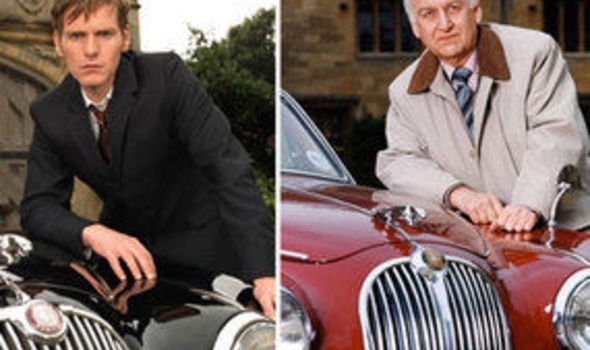
Among the dreaming spires of Oxford, two classic Jaguars have prowled the streets in pursuit of truth and justice. For over three decades of television, Inspector Morse’s burgundy Jaguar Mark II and young Endeavour Morse’s sleek black Jaguar Mark I became as integral to British detective drama as cryptic crosswords and real ale. These weren’t just cars—they were extensions of the character, symbols of refined taste, and instantly recognisable icons that defined what many consider the greatest British crime drama of all time.
Inspector Morse: The Burgundy Mark II (1987-2000)
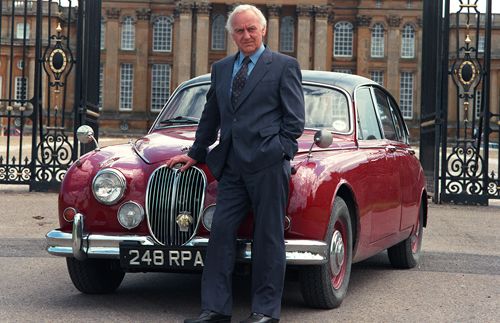
The Car: Registration 248 RPA
The most famous detective car in British television history is arguably the Regency red (often described as burgundy) 1960 Jaguar Mark II 2.4-litre driven by Detective Chief Inspector Endeavour Morse throughout all 33 two-hour episodes of Inspector Morse.
Registration: 248 RPA
This particular Jaguar, with its distinctive maroon paintwork and black vinyl roof, became so synonymous with John Thaw’s portrayal of Morse that seeing a similar car on the streets of Britain would instantly bring the character to mind. The registration number 248 RPA is etched into television history alongside other iconic fictional number plates.
Interestingly, there’s a delicious irony in the registration itself: when the DVLA records were checked, 248 RPA was actually registered as a Daimler, not a Jaguar. This has been hotly debated among Jaguar enthusiasts for years, but the car clearly wears Jaguar badges throughout the series.
The Character Behind the Wheel
Inspector Morse premiered on ITV on 6 January 1987 with the episode “The Dead of Jericho,” based on Colin Dexter’s intelligent series of detective novels. The series would run for 13 years, concluding in November 2000 with “The Remorseful Day,” in which Morse dies from a heart attack—the same fate that befell the character in Dexter’s final novel.
Detective Chief Inspector Morse (his first name, Endeavour, wasn’t revealed until late in the series) was brilliantly portrayed by John Thaw as:
- A cultured, classical music-loving detective with a passion for opera and Wagner
- A beer aficionado who frequented Oxford pubs
- A crossword puzzle enthusiast with a gift for cryptic clues
- A romantic who had little success in love
- A brilliant but often stubborn detective who sometimes arrested the wrong person
- A man whose talents were wasted in positions below his abilities
Paired with the cheerful, working-class Detective Sergeant Robert Lewis (Kevin Whately), Morse solved complex murders across Oxford’s colleges, country estates, and leafy suburbs. The contrast between the two—Morse’s refinement and Lewis’s practicality—created one of television’s great partnerships.
Why a Jaguar?
Here’s where the story gets interesting. In Colin Dexter’s original novels, Morse drove a Lancia—an Italian car that reflected his sophisticated, Continental tastes. When the television series was being developed, the production team couldn’t find a suitable Lancia in the Oxford area (or so the official story goes).
John Thaw himself is credited with suggesting the Jaguar Mark II. Some sources suggest Thaw’s previous role in The Sweeney (where villains frequently drove Mark II Jaguars) influenced the choice. The car perfectly fit Morse’s character:
- Quintessentially British, matching Morse’s patriotic leanings
- Elegant and refined, like Morse himself
- From the early 1960s, suggesting a man who appreciated quality over fashion
- Fast and capable when needed
- A classic that stood apart from modern police vehicles
Colin Dexter was so impressed by the choice that he retroactively changed Morse’s car to a Jaguar in subsequent reprints of his novels and in later books.
The Jaguar Mark II: Engineering Excellence
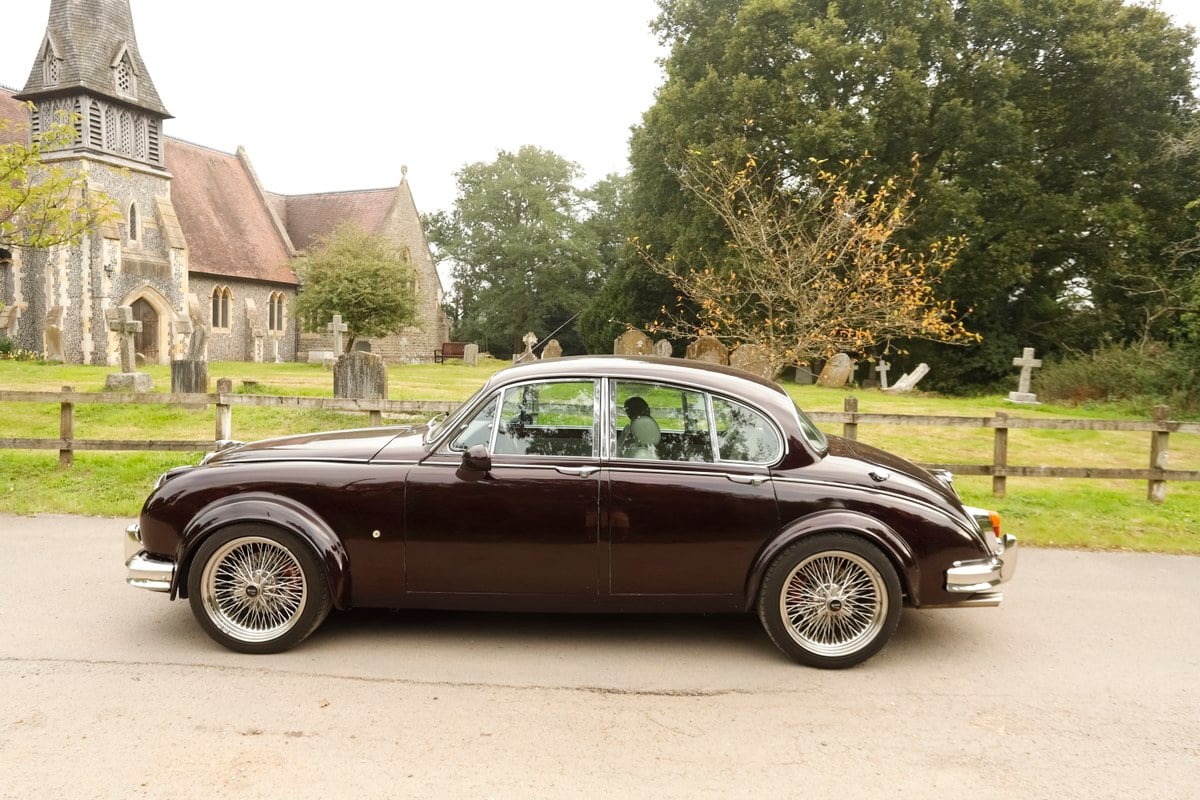
The Jaguar Mark II, produced from 1959 to 1967, represented the peak of Jaguar’s sporting saloon cars. Morse’s 2.4-litre version was the entry-level model, but still offered impressive specification:
Technical Specifications:
- Engine: 2.4-litre (2,483cc) straight-six XK engine
- Power: 120 bhp (89 kW)
- Carburettors: Twin Solex
- Transmission: 4-speed manual or automatic (Morse’s was automatic)
- Top Speed: Approximately 90 mph
- Brakes: Four-wheel disc brakes (advanced for 1960)
The Mark II represented significant improvements over the earlier 2.4 and 3.4 models (retroactively called Mark I):
- 18% increase in glass area for better visibility
- Slimmer front pillars and wider windscreen
- Larger D-shaped rear side windows
- Improved heating system with rear ducting
- Better instrument layout (used on all Jaguars until the XJ Series II in 1973)
- Wider rear track and improved suspension geometry
- Chrome window frames and revised grille
While the 3.8-litre Mark II (with 220 bhp) was the performance king capable of 125 mph, Morse’s 2.4 better suited his character—refined and capable rather than flashy and fast. It also reflected a detective’s salary; the 2.4 was the most affordable Mark II variant.
The Mark II’s Reputation
During the 1960s, the Mark II gained an unfortunate dual reputation:
- Criminals: The 3.4 and especially the 3.8-litre versions were favored by bank robbers and getaway drivers for their speed and spacious interiors
- Police: The same performance made Mark IIs popular as police motorway patrol cars
This dichotomy adds another layer to Morse’s choice—a car that straddled both sides of the law, much like Morse’s often ambiguous relationship with authority.
The Symbol of Morse
The Jaguar became one of the defining symbols of Inspector Morse, alongside:
- Oxford’s dreaming spires
- Classical music (particularly the haunting theme by Barrington Pheloung)
- Real ale in Oxford pubs
- Cryptic crossword puzzles
- The complex, often tragic mysteries
When viewers think of Inspector Morse, they see John Thaw climbing into or out of that burgundy Jaguar, the car parked outside an Oxford college or a country pub, or Morse lost in thought while sitting behind the wheel.
The Car’s Later Life
After filming ended in 2000, the Jaguar 248 RPA was given away in a competition. In 2002, it was auctioned for an astounding £53,200—many times the value of a standard Mark II 2.4. The Morse connection had transformed it from a classic car into a cultural icon.
In November 2005, the car sold again for over £100,000. Even adjusted for the general increase in classic Jaguar values, this represents an extraordinary premium for television history.
Endeavour: The Black Mark I (2012-2023)
The Car: Registration KAN 169
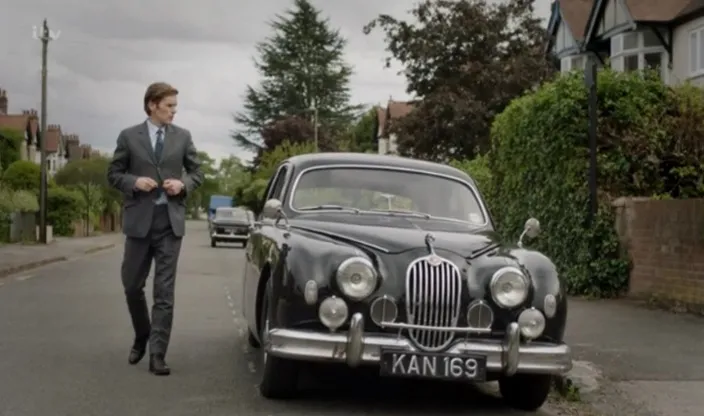
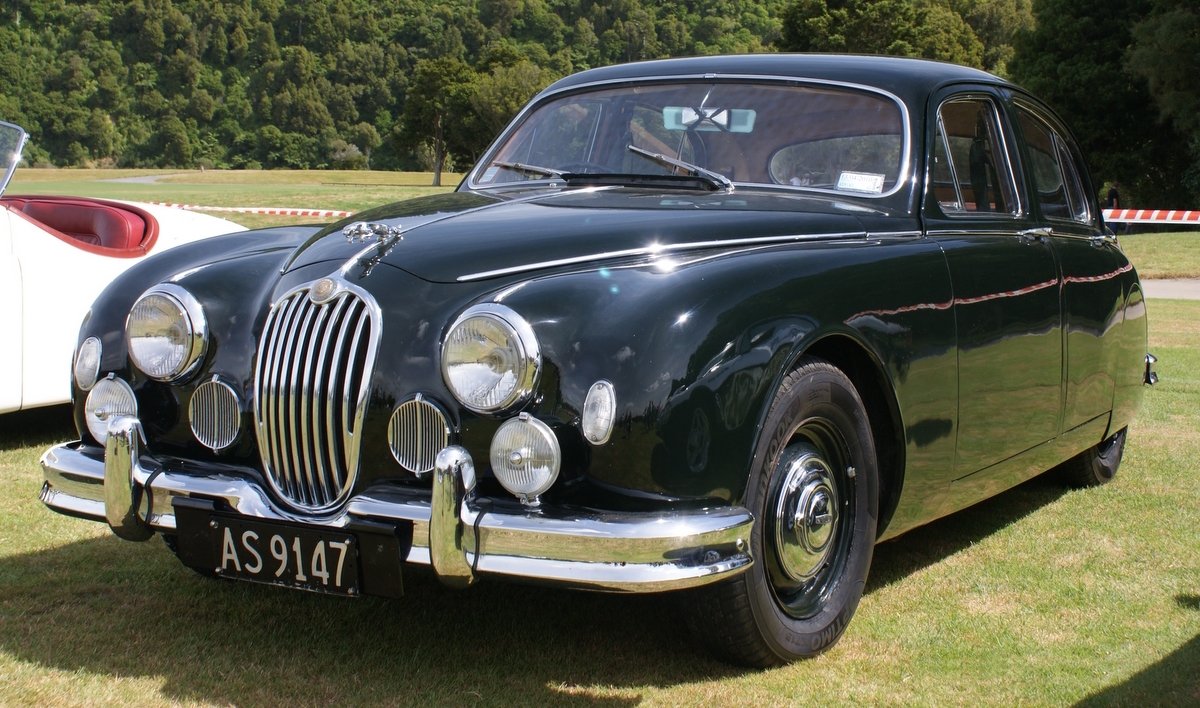
When ITV launched the prequel series Endeavour in 2012, they faced an interesting challenge: what car would young Morse drive? The answer was elegant and historically appropriate—a black 1956 Jaguar Mark I 2.4-litre.
Registration: KAN 169
This sleek black Jaguar, first registered on 19 April 1956, represented the earlier iteration of Jaguar’s sporting saloon. The model was retrospectively called “Mark I” only after the Mark II was released in 1959—at the time, it was simply the “Jaguar 2.4.”
Young Morse Behind the Wheel
Endeavour, which premiered as a pilot on 2 January 2012 and ran for nine series concluding in March 2023, portrayed Morse’s early detective career. Shaun Evans brilliantly captured the young detective constable (later detective sergeant) working under Detective Inspector Fred Thursday (Roger Allam) in Oxford during the 1960s and early 1970s.
The series began in 1965 and progressively moved forward in time, with the final series set in 1972—approaching the timeline when the original Inspector Morse series began. This created anticipation for the eventual convergence of young Morse with the character viewers knew and loved.
Why the Mark I?
The choice of the Mark I Jaguar for Endeavour was inspired for several reasons:
- Historical Accuracy: Set in 1965-1972, a 1956 Mark I would be 9-16 years old—a realistic age for a car owned by a young detective constable
- Character Development: The earlier, less refined Mark I shows Morse’s long-standing appreciation for Jaguars, establishing his taste before he acquired the Mark II
- Visual Distinction: The black color and earlier styling clearly distinguished it from John Thaw’s burgundy Mark II
- Automotive Progression: It beautifully established that Morse would “upgrade” to the Mark II as his career progressed
In the series, young Morse doesn’t initially own the car—it belongs to his superior, DI Fred Thursday. Morse often drives Thursday around (he’s the “bagman”), giving him intimate familiarity with the Mark I. This detail adds poignancy: Morse fell in love with Jaguars while driving his mentor’s car.
The Jaguar Mark I: The Original
The Jaguar 2.4 (later called Mark I) was launched on 28 September 1955 as Jaguar’s first compact, monocoque saloon—a significant departure from their larger models. It represented Sir William Lyons’ vision of bringing Jaguar quality and performance to a wider market.
Technical Specifications:
- Engine: 2.4-litre (2,483cc) straight-six XK engine
- Power: 112 bhp
- Carburettors: Twin Solex
- Transmission: 4-speed manual with optional overdrive, or automatic
- Top Speed: Over 100 mph
- Production: 1955-1959
KAN 169, the specific car used in filming, was an SE (Special Equipment) model, which included:
- Leather upholstery throughout
- Opulent walnut dashboard
- Centrally mounted speedometer and tachometer (cost-saving design that worked for both LHD and RHD markets)
- Superior trim and fittings
Restoration and Film Work
The KAN 169 Jaguar was completely restored in the early 1990s, a project extensively documented in Jaguar Enthusiast magazine between June and October 1990. After restoration, it won numerous concours competitions and appeared in various classic car magazines throughout the 1990s.
In 1999, the cylinder head was converted to run on unleaded fuel, and an overdrive unit was fitted to the manual gearbox—making it more practical for extended filming schedules.
In 2012, a company specializing in film and television vehicle rentals purchased the car specifically to be the “hero car” in Endeavour. It appeared in every episode across all nine series, covering over a decade of production.
As a historic vehicle first registered more than 40 years ago with no substantial modifications, KAN 169 enjoys MOT and tax-exempt status in the UK—a practical benefit during the long filming schedules in Oxford.
The Mark I’s Character
Where the Mark II is elegant and refined, the Mark I has a different character:
- More angular, purposeful styling
- Smaller glass area giving a more enclosed feel
- Simpler interior, though still luxurious by 1950s standards
- Slightly rawer driving experience
- More “working Jaguar” than gentleman’s express
This perfectly suited young Morse—still finding his way, driving someone else’s car, not yet the refined DCI of later years.
The Passing of the Baton
In one of television’s most beautiful moments of continuity, the final episode of Endeavour featured a scene where Shaun Evans’ black Mark I passes John Thaw’s burgundy Mark II 2.4 on an Oxford road. Though Thaw had passed away in 2002, the scene (using archival footage or careful editing) symbolized the passing of the torch from young Morse to the mature detective viewers knew and loved.
This moment connected 36 years of television (1987-2023) and showed the remarkable thought put into creating a cohesive universe across both series.
The Morse Universe: Three Series, Multiple Jaguars
The Morse television franchise spans three distinct series:
Inspector Morse (1987-2000)
- 33 two-hour episodes
- John Thaw as DCI Morse
- Kevin Whately as DS Lewis
- Burgundy Jaguar Mark II 2.4 (248 RPA)
- Set in contemporary Oxford
Lewis (2006-2015)
- 33 two-hour episodes
- Kevin Whately as Detective Inspector Lewis
- Laurence Fox as DS James Hathaway
- Various modern vehicles
- Set in contemporary Oxford
Endeavour (2012-2023)
- 36 episodes across 9 series (including pilot)
- Shaun Evans as young DC/DS Endeavour Morse
- Roger Allam as DI Fred Thursday
- Black Jaguar Mark I 2.4 (KAN 169)
- Set in 1960s-early 1970s Oxford
Together, these series represent one of British television’s most successful franchises, based on just 13 novels by Colin Dexter (who made cameo appearances in almost every episode).
Oxford: The Third Character
Both Jaguars became inseparable from Oxford itself. The city’s medieval colleges, cobbled streets, and surrounding countryside provided the perfect backdrop for these elegant British cars. Filming locations included:
- Various Oxford colleges (often fictionalized)
- The Bodleian Library
- Oxford pubs (many became Morse tourist destinations)
- Surrounding Oxfordshire villages
- The Thames towpath
- North Oxford’s leafy streets
The Jaguars navigating these streets became postcards for a certain vision of England—cultured, intellectual, historic, and quintessentially British.
Cultural Impact
The impact of Morse’s Jaguar extended far beyond the screen:
On Classic Car Values: The series significantly boosted interest in Jaguar Mark IIs, particularly 2.4-litre models that had been somewhat overshadowed by the more powerful variants.
Tourism: Oxford tour companies offer “Morse tours” visiting filming locations—invariably mentioning the Jaguar.
Merchandising: Scalextric produced a model of Morse’s Jaguar (ref C4502), allowing fans to race their own 248 RPA around miniature Oxfords.
Pop Culture: The Jaguar became shorthand for “clever detective with refined taste.” When people describe a character as “a bit Inspector Morse,” the Jaguar is part of that image.
Literary Changes: The television series’ success was so complete that Colin Dexter changed the original novels to feature the Jaguar instead of the Lancia.
The Cars Today
248 RPA (Morse’s Mark II): Now in private hands, having sold for over £100,000 in 2005. It occasionally appears at classic car shows and Morse-related events.
KAN 169 (Endeavour’s Mark I): Following the end of production in 2023, the car remains with its owners. It may appear at car shows and television history exhibitions.
Both cars represent not just automotive history but television history—tangible connections to beloved characters and outstanding drama.
Why These Cars Worked So Perfectly
The success of both Jaguars in their respective series comes down to perfect casting—not of actors, but of vehicles:
Character Reflection: Both cars reflected Morse’s personality—refined, British, appreciative of quality engineering, somewhat old-fashioned, and utterly dependable.
Visual Appeal: The Jaguars photographed beautifully, their classic lines complementing Oxford’s architecture and countryside.
Authenticity: Unlike some television shows that give characters improbably glamorous cars, both Jaguars felt authentic to a detective’s salary and taste.
Practicality: The four-door saloon design allowed filming interior conversations while driving—essential for the dialogue-heavy scripts.
Nostalgia: Both cars evoked a sense of timelessness, perfect for mysteries that often dealt with past secrets coming to light.
British Identity: At a time when many British police procedurals featured generic modern cars, the classic Jaguars asserted British identity and quality.
The Jaguar Mark II in Popular Culture
Before Morse adopted it, the Mark II already had significant cultural presence:
- Getaway car of choice for 1960s bank robbers
- Police motorway patrol vehicle
- Featured prominently in The Sweeney (1975-1978)
- Favorite of professional criminals and racing drivers alike
- Symbol of 1960s British engineering at its peak
Morse’s Jaguar rehabilitated the car’s image from “villain’s wheels” to “gentleman detective’s transport”—though the car’s complex history adds to its appeal.
Technical Appreciation
Both Morse and Endeavour accurately captured the experience of driving classic Jaguars:
- The distinctive exhaust note of the XK straight-six engine
- The wood-and-leather interior
- The mechanical precision of 1950s-60s engineering
- The comfortable ride quality
- The occasional temperamental nature of British classics
Scenes of Morse sitting in the car thinking, driving through rain-soaked Oxford streets, or arriving at country houses all felt authentic because the car was authentic—not a modern replica or stand-in.
Cozy Crime Connections
Both Inspector Morse and Endeavour exemplify the “cozy crime” genre that British television perfected:
- Complex but not graphically violent mysteries
- Character-driven narratives
- Beautiful settings
- Intellectual rather than action-based detection
- Underlying warmth despite dark subject matter
- Emphasis on relationships and community
The classic Jaguars contributed to this atmosphere—they’re reassuring, familiar, non-threatening vehicles that nonetheless hint at hidden depths and past mysteries, much like the shows themselves.
The Legacy
As of 2025, with all three series concluded, the Morse franchise stands as one of British television’s greatest achievements. The Jaguars—248 RPA and KAN 169—are crucial parts of that legacy.
In 2018, Inspector Morse was voted the greatest British crime drama of all time by Radio Times readers. The British Film Institute ranked it #42 on their list of 100 Greatest British Television Programmes in 2000.
Future generations discovering these shows will be struck by:
- The quality of writing and acting
- The beautiful Oxford locations
- The memorable music
- And yes, those magnificent Jaguars
A Burgundy Thread Through Television History
From 1987 to 2023, across 36 years and 102 episodes (counting all three series), Jaguars have been central to one of television’s most beloved franchises. Two classic British cars—one burgundy, one black—became as famous as the characters who drove them.
For classic car enthusiasts, they represent Jaguar’s golden age of sporting saloons. For television fans, they’re inseparable from Inspector Morse. For anyone who appreciates the marriage of character and vehicle in storytelling, they’re perfect examples of how the right car can define a character as much as the right actor.
As Morse would say (probably while sitting in his Jaguar with a pint nearby): “Lewis, there are few pleasures in life more satisfying than a well-engineered British car, a complex mystery, and decent beer. Not necessarily in that order.”
Want to know more about classic cars from detective shows? Visit What Classic Car for detailed articles on iconic vehicles like these Jaguars, Vera’s Land Rover Defender, and other memorable motors from your favorite detective series.
Specifications Comparison
Inspector Morse: 1960 Jaguar Mark II 2.4
- Registration: 248 RPA
- Year: 1960
- Model: Jaguar Mark II 2.4
- Engine: 2,483cc straight-six XK engine
- Power: 120 bhp (89 kW)
- Transmission: Automatic
- Colour: Regency Red (Burgundy) with black vinyl roof
- Top Speed: ~90 mph
- Series: Inspector Morse (1987-2000), 33 episodes
- Current Status: Private ownership
Endeavour: 1956 Jaguar Mark I 2.4 SE
- Registration: KAN 169
- First Registered: 19 April 1956
- Model: Jaguar 2.4 SE (later called Mark I)
- Engine: 2,483cc straight-six XK engine
- Power: 112 bhp
- Transmission: 4-speed manual with overdrive
- Colour: Black
- Top Speed: >100 mph
- Series: Endeavour (2012-2023), 36 episodes
- Current Status: Private ownership
“There’s always time for another pint, Lewis. The Jaguar can wait.” — The spirit of Inspector Morse
See Also: Detective Cars on Screen
More Detective Cars – Explore the complete collection
Inspector Lynley’s Jensen Interceptor – Lynley’s British Icon with Italian Styling
Harry Wild’s BMW 3 Series E30 – Jane Seymour’s red 1980s BMW from Dublin’s literary detective drama
Gene Hunt’s Ford Cortina – The Sweeney-style Ford from Life on Mars
Rosemary & Thyme’s Land Rover Series III – The gardening detectives’ practical British 4×4
Bergerac’s Triumph Roadsters – Two different Triumph Roadsters both wearing Jersey registration J 1610
Jonathan Creek’s Citroën 2CV – The windmill-dwelling magician’s green French minimalist runabout
Whitstable Pearl’s 2CV Fourgonnette – The van variant of the 2CV used by Pearl’s seaside restaurant detective
Queens of Mystery Morris Traveller – Matilda’s mother’s 1960s woodie driven in every investigation
