Rosemary & Thyme
 United Kingdom
About This Show
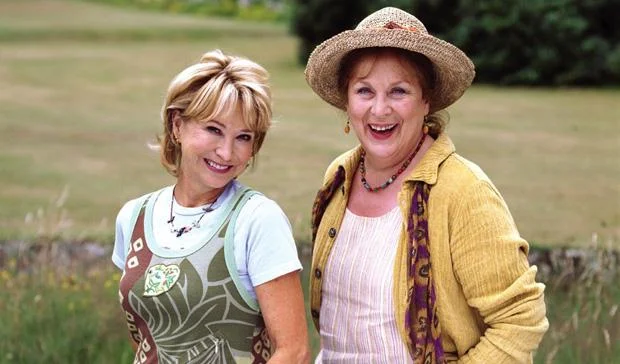
When former police officer Rosemary Boxer and struggling nursery owner Laura Thyme meet by chance at a manor house garden, neither expects to find a corpse amongst the herbaceous borders – nor that this will be the first of many murders they’ll encounter. Armed with their horticultural expertise and unexpected detective instincts, these two middle-aged women build a thriving garden design business whilst solving crimes that bloom in their well-heeled clients’ beautiful gardens. Find out more about Roseary & Thyme’s Land Rover Series III.
Rosemary and Thyme follows the unlikely partnership between two women who bond over their shared love of gardening and a rather unfortunate tendency to stumble upon dead bodies. What begins as a chance meeting at a murder scene evolves into both a successful garden design business and an inadvertent detective agency, as the duo discover that investigating murders is almost as rewarding as cultivating a perfect herbaceous border.
Dr. Rosemary Boxer is a brilliant botanist and former university lecturer whose academic career imploded after discovering her professor husband’s affair with a younger colleague. Left professionally adrift and personally devastated, Rosemary initially takes a temporary position cataloguing plants at a country estate, where she encounters both a suspicious death and her future partner. Rosemary brings scientific rigour, extensive plant knowledge, and a sharp analytical mind to both gardening and detection. Her academic background means she approaches problems methodically, researching thoroughly and applying logic – skills that prove equally valuable whether identifying rare specimens or uncovering murderers.
Laura Thyme is a more down-to-earth character whose plant nursery has failed, leaving her financially struggling and emotionally bruised. A trained horticulturist with practical gardening skills and a working-class background, Laura provides the hands-on expertise whilst Rosemary supplies the theory. She’s warmer and more intuitive than Rosemary, quicker to trust and sympathise with people, though this occasionally leads her into dangerous situations. Laura’s people skills and ability to chat with anyone from head gardeners to aristocratic clients often elicit useful information that the more reserved Rosemary might miss.
The dynamic between Rosemary and Thyme is the heart of the series. They’re initially very different – Rosemary intellectual and somewhat prickly, Laura practical and gregarious – but they complement each other perfectly. Their friendship develops naturally through shared experiences, mutual respect for each other’s expertise, and the bond formed through repeatedly finding themselves embroiled in murder investigations. The show celebrates female friendship between mature women, depicting a relationship built on equality, trust, and genuine affection rather than rivalry or competition.
The premise cleverly combines two traditionally “cosy” elements – gardening and murder mysteries – in a way that feels organic rather than forced. Rosemary and Laura establish a garden design and restoration business, travelling to stunning locations across Britain and Europe to work on everything from cottage gardens to grand estate grounds, from monastery herb gardens to contemporary landscapes. Inevitably, wherever they go, murder follows – or perhaps they simply notice what others overlook amongst the flowerbeds.
The horticultural element isn’t merely decorative; plants often play crucial roles in the mysteries. Poisonous plants become murder weapons, rare specimens provide motives, garden history reveals secrets, and botanical knowledge helps solve crimes. Rosemary’s expertise in plant toxicology proves particularly useful, whilst Laura’s practical understanding of gardening routines and relationships between garden staff often provides investigative breakthroughs. The show takes its gardening seriously, featuring real horticultural information and showcasing beautiful gardens that become characters in their own right.
The locations are spectacular, with episodes filmed at historic houses, botanical gardens, vineyards, and estates across the UK and continental Europe. The series uses these settings to full advantage, combining travelogue elements with murder mystery. Whether in the Cotswolds, Provence, Italy, or the Scottish Highlands, the gardens provide both stunning visuals and integral plot elements. Each location brings its own character, gardening traditions, and social dynamics that influence both the crimes and their solutions.
The murders themselves follow cosy mystery conventions – they’re puzzles to be solved rather than gritty crime dramas. Bodies are discovered in elegant surroundings, suspects are drawn from particular social circles (often wealthy landowners, aristocrats, or the gardening world’s elite), and violence occurs off-screen. The crimes frequently involve inheritance disputes, romantic entanglements, professional jealousies, or secrets from the past surfacing in the present – classic mystery motives played out against horticultural backdrops.
What distinguishes Rosemary and Thyme is its celebration of middle-aged women as protagonists. Both women are in their fifties when the series begins, dealing with divorce, career setbacks, and reinventing themselves at an age when society often considers women invisible. The show rejects this invisibility, presenting Rosemary and Laura as capable, intelligent, attractive, and vital. They have romantic interests occasionally, but these subplots never overshadow their friendship or professional partnership. The series argues that women’s lives don’t end at fifty – they can start new careers, form profound friendships, have adventures, and prove themselves extraordinarily capable.
The tone is gentle and optimistic despite the murder-per-episode body count. There’s humour in the situations they find themselves in, the contrast between their gardening work and detective activities, and the banter between the two leads. Rosemary’s occasional pomposity meets Laura’s earthier pragmatism, creating comedy through their different approaches to both gardening and investigation. The show never becomes dark or disturbing; even murders are treated as puzzles requiring solution rather than tragedies requiring grief.
Supporting characters rotate with each episode but often include local police (usually dismissive initially but eventually grateful for the women’s help), garden owners and their families (harbouring secrets and grudges), other gardeners and garden staff (sources of gossip and information), and various suspects from the inevitable pool of people with motives and opportunities. Guest stars often include well-known British actors enjoying themselves in these elegant, escapist productions.
The relationship with local law enforcement follows a familiar pattern – police are initially sceptical of these amateur sleuths, particularly when they’re middle-aged women in gardening gloves, but Rosemary and Laura’s track record eventually earns grudging respect. Unlike some amateur detective shows where the police are portrayed as incompetent, here they’re simply operating with less information, as the gardeners’ access to clients’ homes, staff areas, and private conversations provides investigative advantages professionals lack.
The series explores themes of reinvention, resilience, and the value of expertise. Both women have experienced significant setbacks – professional humiliation, financial failure, personal betrayal – yet they’ve rebuilt their lives through combining their skills and supporting each other. Their garden design business thrives not despite but perhaps because of their unconventional backgrounds and broad life experience. The show suggests that setbacks can become opportunities, that it’s never too late to start again, and that unexpected partnerships can prove the most rewarding.
Rosemary and Thyme also celebrates craftsmanship and traditional skills. In an increasingly digital world, the series showcases hands-on horticultural expertise – the knowledge of how plants grow, what they need, how to design with them, and how gardens function as ecosystems. This expertise is portrayed as valuable, specialised knowledge requiring years of study and practice, worthy of respect and proper compensation. The women charge appropriately for their work and are shown as serious professionals, not hobbyists.
The gardening provides a metaphorical framework for the mysteries themselves. Just as gardens require careful observation to understand what’s thriving and what’s struggling, murder investigations demand attention to detail and understanding of complex relationships. Both pursuits involve uncovering what’s hidden beneath the surface – whether roots damaging foundations or secrets destroying lives. The patience required for gardening mirrors the persistence needed for detective work, and both ultimately aim to restore order from chaos.
Throughout the series, there’s a distinctly feminine sensibility that doesn’t equate femininity with weakness. Rosemary and Laura approach problems collaboratively, value emotional intelligence alongside intellectual analysis, and create solutions through understanding rather than confrontation. They’re empathetic without being naive, strong without being aggressive, and intelligent without being condescending. The show presents an alternative to traditional male-dominated detective fiction whilst still delivering satisfying mysteries.
The production values emphasise beauty – stunning locations, gorgeous gardens in all seasons, elegant country houses, and picturesque villages. Cinematography showcases the natural world at its finest, from formal parterres to wildflower meadows, from ancient kitchen gardens to contemporary designs. This visual feast is integral to the show’s appeal, offering escapism into worlds of beauty, privilege, and horticultural excellence, even as murders disturb the peace.
Ultimately, Rosemary and Thyme offers comfort viewing that combines two quintessentially British obsessions – gardening and murder mysteries – whilst celebrating female friendship, resilience, and expertise. It’s a series where intelligence and observation trump physical strength, where knowledge of plants proves as powerful as forensic science, and where two women of a certain age demonstrate repeatedly that they’re more than capable of both cultivating perfect gardens and catching clever killers. The show is gentle, beautiful, satisfying, and thoroughly enjoyable – rather like a well-tended English country garden in full bloom.

Locations
Setting
- United Kingdom
Main cast
Highlighted actors have their own page listing every show they appear in.








Character Tracker
Only shows characters you’ve met so far!
🔒 More characters will unlock as you update your progress
Credits and More
Credits
Tom Clegg, Clive Exton, Brian Eastman
📚 Related Books, DVDs and Merchandise
[azp_custom_product id=”10″]
🔗 External Links
Similar Shows
Shows with similar vibes and style