Set in the fictional Sicilian town of Vigàta, Inspector Montalbano follows Commissario Salvo Montalbano, a sharp, sardonic, and deeply food-loving police chief who solves complex, often morally murky cases against a backdrop of stunning Sicilian coastline. Aided by his loyal deputy Fazio, womanising colleague Mimì Augello, and the endearingly hapless switchboard operator Catarella, Montalbano navigates local corruption, the shadow of the Mafia, and his own perpetually strained long-distance relationship with girlfriend Livia, all whilst rarely missing a leisurely, meticulously described lunch.
Inspector Montalbano (Il commissario Montalbano) is a long-running Italian television series produced and broadcast by RAI since 6 May 1999, based on the internationally bestselling detective novels of Andrea Camilleri. Running for an extraordinary 15 seasons and 37 feature-length episodes (each roughly 100 minutes, essentially a television film) until its conclusion on 8 March 2021, the series became one of Italian television’s most beloved and critically acclaimed exports, achieving significant international success including a devoted following in the UK and US, where it has aired with English subtitles to considerable acclaim.
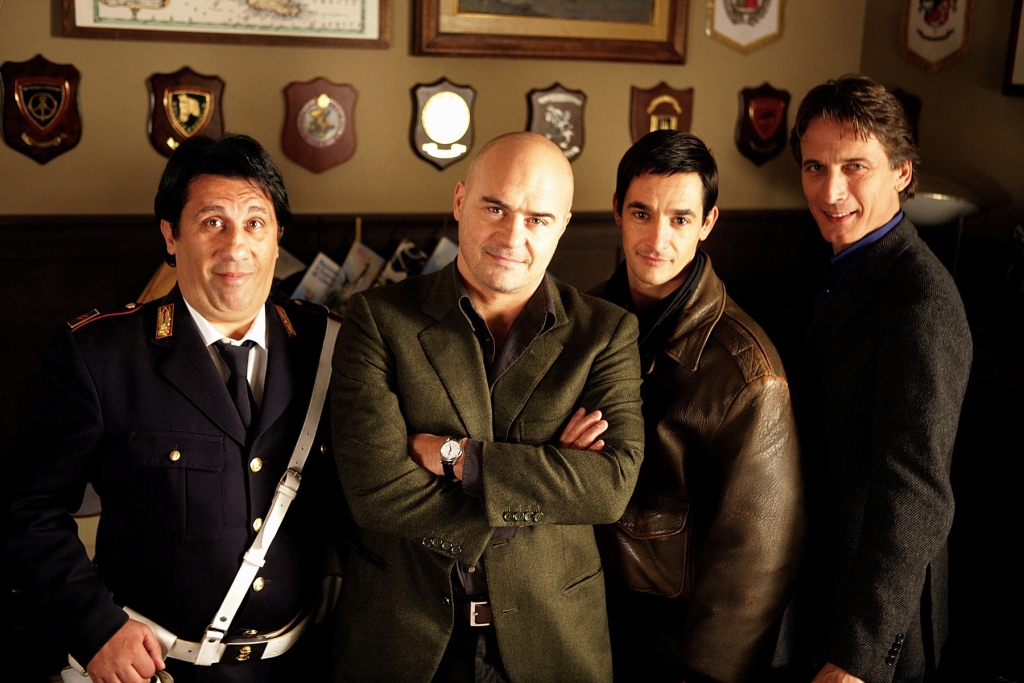
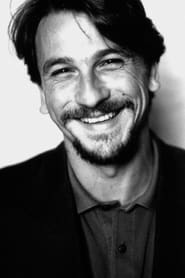
The series stars Luca Zingaretti as Commissario Salvo Montalbano, chief of police in the fictional town of Vigàta, itself based on Camilleri’s own hometown of Porto Empedocle in Sicily. Zingaretti, born in Rome rather than Sicily, had to consciously adjust his accent and mannerisms to convincingly inhabit the role—a task made easier by Camilleri himself, who was teaching at the National Academy of Dramatic Art Silvio D’Amico whilst Zingaretti studied there. Montalbano is a gourmet, a keen long-distance swimmer, and lives alone in a beautiful oceanfront house, presenting a detective whose personal appetites—for food, for solitude, for the sea—are given equal narrative weight alongside his investigative work, creating a character study as much as a crime procedural.
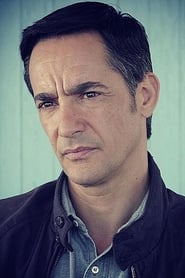
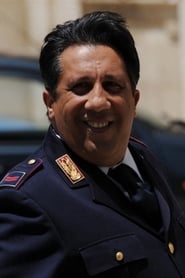
Montalbano’s investigative team brings distinct personalities and comic energy to each case. Fazio (Peppino Mazzotta) serves as his loyal, diligent deputy and most trusted colleague; Domenico “Mimì” Augello (Cesare Bocci) is a fellow inspector whose talents are frequently undermined by his incorrigible womanising; Galluzzo (Davide Lo Verde) provides headstrong, brash expertise with firearms; and Agatino Catarella (Angelo Russo) serves as the station’s receptionist and reluctant computer expert, a beloved comic figure whose malapropisms and unwavering, almost puppyish devotion to Montalbano—he would, as one description puts it, jump off a cliff if ordered to—provide some of the series’ most enduringly popular moments. Montalbano’s long-distance relationship with his Genoese girlfriend Livia, played across different seasons by Katharina Böhm, Lina Perned, and Sonia Bergamasco, adds a recurring thread of romantic frustration, not helped by the seemingly endless parade of attractive Sicilian women drawn to Montalbano wherever he goes.
Each episode presents a single, often layered case—frequently multiple parallel investigations—unfolding against the backdrop of “deceptively quiet, rural Vigàta,” where complicated, sometimes brutal crimes regularly disrupt the town’s sun-baked tranquillity. The series doesn’t shy away from engaging with Sicily’s darker social realities, including corruption and the pervasive influence of organised crime, whilst simultaneously reveling in the sensory pleasures of Sicilian life—food, in particular, is treated with an almost reverential attention, with Montalbano’s regular lunches at his favourite restaurant, Enzo’s, becoming something of a ritual within the show’s structure, alongside meals prepared by his loyal housekeeper Adelina (Mirella Petralia), whom he first met after arresting her burglar son.
Visually, the series is defined by its stunning Sicilian settings, filmed extensively around Ragusa Ibla and the surrounding province, along with the coastal district of Punta Secca (part of Santa Croce Camerina), which doubles as Montalbano’s beachfront home. This authentic sense of place—golden stone architecture, dazzling coastline, and warm Mediterranean light—has become inseparable from the show’s identity, with numerous fans making pilgrimages to the real locations used in filming, similar to the tourism impact seen with Shetland or Broadchurch. Franco Piersanti’s evocative musical score further enhances the show’s distinctive atmosphere, becoming as recognisable to fans as the sun-washed visuals themselves.
Critical reception across its long run was overwhelmingly positive, with reviewers repeatedly praising the show’s ability to breathe freshness into a well-established genre through its confident sense of place, richly drawn characters, and refusal to rush its storytelling. One characteristically warm assessment described watching the series as being “like eating a delicious Italian meal that immensely satisfies and leaves you wanting more”—an apt comparison given the show’s genuine culinary preoccupations. The series occasionally featured notable international guest appearances, including Dominic Chianese (best known as Corrado “Junior” Soprano from The Sopranos) in the acclaimed episode “Un diario del ’43” (“A Diary from ’43”), creating a pointed, knowing juxtaposition between an American actor famous for playing organised crime and a Sicilian detective built around confronting it.
The show’s success led directly to a prequel spin-off, The Young Montalbano (Il giovane Montalbano, 2012-2015), exploring the character’s early career in 1990s Sicily with a younger cast, further expanding the franchise whilst allowing longtime fans to revisit the same world from an earlier vantage point. Inspector Montalbano’s influence on European crime drama has been considerable, helping establish a template for strongly regionally rooted, character-and-atmosphere-driven detective series that prioritise sense of place and personal texture as much as plot mechanics—qualities it shares with contemporaries like France’s Commissario Brunetti adaptations or Germany’s Die Toten vom Bodensee, whilst remaining utterly distinctive in its specifically Sicilian identity, culinary obsessions, and Camilleri’s particular blend of humour, melancholy, and social conscience.
For fans of European cosy-adjacent crime drama who appreciate a detective defined as much by his appetites and his devotion to place as by his investigative brilliance, Inspector Montalbano remains an essential entry—one of the most successful and enduring achievements in the broader tradition of regionally specific, character-driven detective television, standing proudly alongside Britain’s own beloved procedurals as proof that the format translates beautifully across language and culture whilst losing none of its essential charm.
Yes, just Register and you will then be able to add notes to every character. Just click/tap on the character. The notes can only be seen by you (when you are Logged In)
Locations
Setting
Vigata and Montelusa (fictional), Sicily, Italy— Camilleri’s Vigata is inspired by Porto Empedocle (Agrigento province). Montelusa is the fictional provincial capital.
Filmed in
Ragusa province, southeastern Sicily, Italy— TV Vigata is built from real Baroque towns: Scicli (Vigata police station = town hall on Via Mormino Penna), Ragusa Ibla (town centre), Punta Secca (Montalbano’s seaside house / Marinella), plus Modica, Sampieri, Donnalucata, Scoglitti and others (Wikipedia, Slow Sicily guide).
🔒 More characters will unlock as you update your progress
Credits and More
Credits
📚 Original Author
Andrea Camilleri — 28+ Montalbano novels; the entire series is adapted
🎬 TV Series Creator
Andrea Camilleri (source novels); Palomar for RAI, with screen adaptations by writers including Francesco Bruni. Luca Zingaretti stars as Commissario Salvo Montalbano from 1999–2021.